

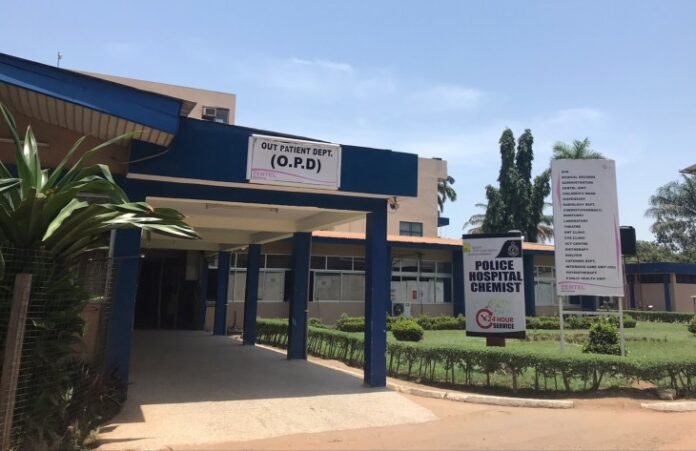

Multiple official reports and government-commissioned assessments have revealed what analysts describe as one of Ghana’s most troubling public infrastructure controversies, involving the long-delayed redevelopment of the Ghana Police Hospital and alleged significant financial losses to the State.
The project started in September 2003 under former President John Agyekum Kufuor, following a contract agreement between the Government of Ghana and the UK-based International Hospitals Group (IHG).
It aimed to transform the Accra Police Hospital into a modern, world-class facility serving both security personnel and the public.
Also read: China holds military drills around Taiwan as warning to ‘separatist forces’
More than twenty years later, the hospital remains incomplete, despite evidence indicating that the government may have paid well beyond the value of work completed.
Millions paid, little work delivered
A Value for Money (VfM) audit conducted by PricewaterhouseCoopers (PwC) in 2015 revealed that although only about £4.85 million worth of work had been legitimately completed by February 2015, Ghana had already paid approximately £50.3 million to the contractor.
PwC concluded that the fair escalated cost of the project should have been around £20 million, yet the contract value was controversially revised to £107.7 million without compliance with mandatory procurement procedures.
The audit also highlighted potential liquidated damages of £730,465 due to contractor delays and raised concerns about the conduct of consultants, advisers, and public officials involved in approving payments and contract variations. It further recommended criminal investigations, arbitration, and recovery of excess payments.
Alarm as works stalled
Government correspondence shows that in February 2015, the Cabinet rejected a request by the Ministry of the Interior for an additional £40 million to complete the project, citing weak controls and escalating costs. Cabinet instead ordered an independent audit and directed authorities to explore repackaging or re-awarding the contract.
Funding gaps and management concerns led to a slowdown from 2014, with consultants instructing IHG to scale down work and suspend procurement of key components—effectively stalling the project.
The dispute eventually triggered international legal engagement, with Ghana’s Attorney-General retaining UK-based law firm White & Case LLP in preparation for arbitration. The issue also drew diplomatic attention from the UK due to IHG’s British roots and linked financing arrangements.
By 2018, the Attorney-General confirmed that the matter had been amicably resolved, paving the way for cooperation with the UK’s National Crime Agency. In 2019, the Interior Ministry invited IHG to remobilise and resume works, despite persisting concerns over value for money.
Growing controversy
A March 2023 assessment by Crown Agents Ghana Limited (CAGL), commissioned by the Ministry of Finance, reignited public interest. The report found that Ghana had been overcharged by approximately £40 million, while the cost required to complete the hospital stood at an estimated £25 million.
Crown Agents described the contract as “fundamentally and significantly imbalanced”, lacking value for money and heavily disadvantaging the State. It recommended termination of the agreement, recovery of excess payments, and re-procurement under stricter international contracting standards.
The report on the Police Hospital project outlined multiple breaches by the contractor, including unauthorised subcontracting, failure to meet timelines, unjustified design alterations, unapproved suspension of works, and unsubstantiated claims—some amounting to nearly £9 million in additional costs.
Pressure for accountability
With two high-profile audits—eight years apart—highlighting governance failures and losses, pressure is mounting on the Ministry of the Interior to act decisively.
Experts caution that continuing the contract could expose Ghana to further financial risk, especially in the absence of robust financial guarantees such as performance bonds and advance payment protections.
The Ghana Police Hospital redevelopment has now become a symbol of costly contract mismanagement and weak public oversight at a time when the country is battling fiscal constraints and increased public demand for transparency.