
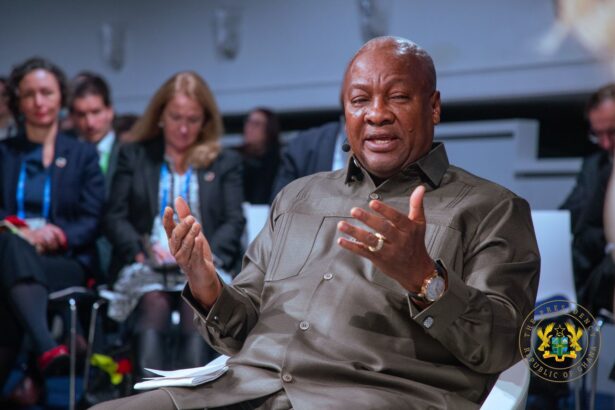

The Government under President John Dramani Mahama has recorded a major turnaround in the country’s energy sector by clearing approximately US$1.47 billion in accumulated arrears within its first year in office.
The move has restored confidence among international partners and brought relief to an energy sector that had been weighed down by years of non-payment, threatening both financial stability and power generation.
When President Mahama assumed office in January 2025, the sector was facing one of its most severe financial crises in recent history. Prolonged non-payment for gas supplied from the Offshore Cape Three Points (OCTP) field had fully depleted the US$500 million World Bank Partial Risk Guarantee (PRG), a critical safeguard designed to ensure reliability and attract investment.
Also read: Employment, enterprise will anchor my presidency — Ken Agyapong
The PRG, established in 2015 under the previous NDC administration, was instrumental in mobilising nearly US$8 billion in private sector investment through the Sankofa Gas Project. Its exhaustion under the previous administration was widely regarded as a major governance failure that severely damaged Ghana’s international credibility.
In a significant fiscal milestone, the Mahama Administration announced that as of December 31, 2025, Ghana had fully repaid US$597.15 million, including interest, drawn from the World Bank PRG.
The repayment restores the guarantee to its full value and reaffirms Ghana’s standing as a credible and reliable partner in international finance.
Between January and December 2025, the government also settled all outstanding gas invoices owed to ENI and Vitol for electricity generation. These payments, amounting to approximately US$480 million, have brought Ghana fully up to date with its obligations to the Sankofa partners.
Officials say adequate budgetary provisions have now been put in place to ensure timely payments and prevent a recurrence of arrears.
The government further engaged Tullow Oil and Jubilee Field partners, agreeing on a clear roadmap to guarantee full payment for all gas produced. This is expected to support stable nationwide electricity generation and fuel industrial growth.
Recent engagements have already led to increased gas output, aligning with the administration’s strategy to expand domestic gas supply and reduce dependence on costly liquid fuels.
As part of broader sector reforms, the Mahama Administration successfully renegotiated all Independent Power Producer (IPP) agreements to secure better value for money.
In 2025 alone, the government paid approximately US$393 million in legacy IPP debts. Payments included:
-
Karpowership Ghana Co. Ltd – US$120,000,000
-
Cenpower Generation Co. Ltd – US$59,444,180
-
Twin City Energy (Amandi) – US$37,986,534
-
Early Power Ltd – US$42,000,000
-
BXC Company Ltd – US$10,560,000
-
Meinergy Technology – US$8,820,000
-
Sunon Asogli Ghana Ltd – US$54,000,000
-
AKSA Energy Limited – US$30,000,000
-
Cenit Energy Ltd – US$30,000,000
The payments, totalling US$392,810,714, formed a significant part of the overall US$1.47 billion deployed to stabilise the energy sector.
According to the Ministry of Finance, beyond clearing inherited arrears, the government has remained largely current on all IPP invoices for 2025 through strict adherence to the Cash Waterfall Mechanism.
The government has assured citizens, investors, and industry stakeholders that the era of unchecked energy sector debt accumulation is over, signalling a new chapter of financial discipline and sustainability.