

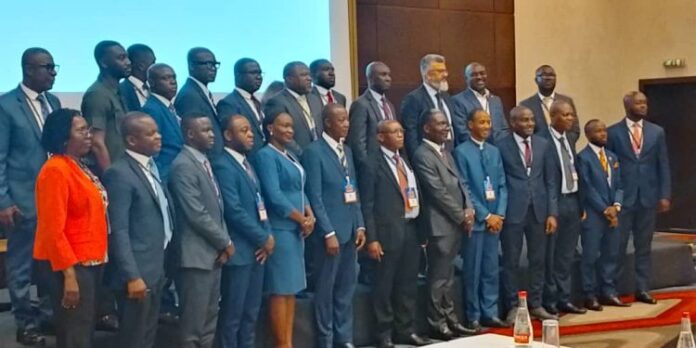

The Bank of Ghana (BoG) has reaffirmed its commitment to establishing a fully functional non-interest banking and finance (NIBF) ecosystem, describing capacity building and regulatory harmonisation as essential pillars for the industry’s rollout.
Speaking on behalf of the Governor, Dr Johnson Asiama, the Head of the Banking Supervision Department, Ismail Adam, said the central bank has reached a critical point in its preparations following extensive stakeholder engagement with both Christian and Muslim communities to adopt a secular terminology that reflects national inclusiveness.
“We are happy that we are participating in this capacity-building exercise to pave the way for you to take advantage of the window for non-interest banking and financing,” he said, adding that the BoG’s work marks the first significant regulatory investment toward commercialising the concept in Ghana.
Also read: Ghana not part of US Green Card review – Ablakwa
Mr Adam stressed that non-interest banking – largely asset-backed, risk-sharing and profit-sharing – requires bespoke skills across product development, contract structuring, accounting, auditing and risk management. He urged financial institutions to upgrade their systems, strengthen governance structures and invest heavily in staff training to align with the BoG’s draft regulatory guidelines, which propose a two-tier governance arrangement to support effective compliance.
He further encouraged banks to develop phased implementation plans, business cases, and target-market analyses rather than waiting for the final directive to be completed. “Only when we understand will we be able to roll out the products effectively for the benefit of the clients we serve,” he noted.
SEC Preparing Guidelines for Sukuk Issuance
The Director-General of the Securities and Exchange Commission (SEC), Dr James Klutse Avedzi, said the capital market regulator is developing the necessary guidelines to support the issuance and regulation of Sukuk – non-interest Islamic bonds – to finance major infrastructure projects.
Citing examples from Nigeria, Kenya, Tanzania and Togo, he indicated that the introduction of Sukuk in Ghana would broaden capital-raising options for both government and corporates, especially in areas such as road infrastructure where financing gaps remain significant.
“Ghana is ready for the introduction of non-interest banking. We at the SEC have participated in the training and learning process from day one,” he said, adding that a dedicated regulatory framework for Sukuk is being finalised to ensure investor protection and efficient market operations.
Academia Commends Regulators for Harmonised Approach
Delivering the welcome address, Professor John Gatsi praised the BoG, SEC and National Insurance Commission (NIC) for forming a joint regulatory committee to develop and harmonise guidelines for the emerging sector. He described the workshop as critical to equipping practitioners with the skills needed to avoid regulatory inconsistencies and ensure a smooth industry take-off.
“The global financial landscape is evolving, and the demand for non-interest banking and finance is undeniable,” he said. He highlighted support received from international regulators and institutions including the Central Bank of Nigeria, Central Bank of Malaysia, Bank of England and major non-interest banks in Nigeria, during Ghana’s preparation phase.
Professor Gatsi said the training will expose participants to foundational principles, licensing and capital requirements, governance and compliance issues, liquidity management tools, and the structuring of non-interest products and insurance.
The training programme focused on five core areas essential to the rollout of non-interest banking in Ghana; Product development, Licensing requirements, Capital requirements, Liquidity management instruments, Governance and compliance frameworks.
The push toward NIBF forms part of Ghana’s broader financial sector diversification agenda, with regulators emphasising that the new model anchored on risk-sharing and ethical financing, will expand the pool of financial products and support inclusive economic growth.
NorvanReports