


Concerns are intensifying over the Minerals and Mining (Royalty) Regulations, 2025, as critics accuse the government of quietly restoring a controversial 5 per cent lithium royalty regime that was earlier rejected in the Barari DV lithium agreement.
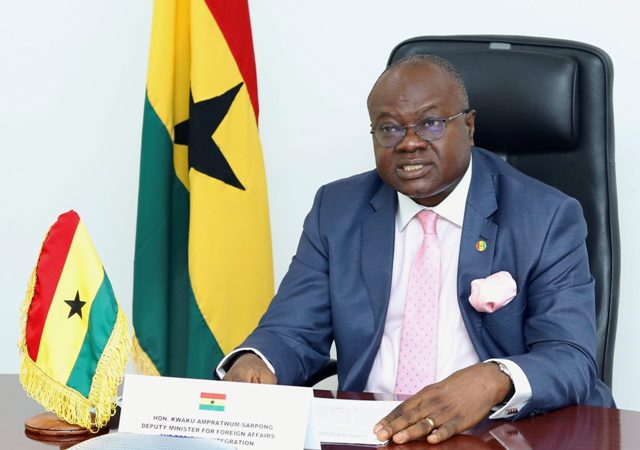
The draft Legislative Instrument (LI), currently before Parliament’s Subsidiary Legislation Committee, has come under scrutiny from the Ranking Member on the Lands and Natural Resources Committee, Kwaku Ampratwum-Sarpong, who warns that the regulations mirror fiscal terms that previously attracted strong opposition from lawmakers and civil society groups.
According to him, the government appears determined to push through the same royalty structure despite earlier assurances and public resistance.
Also read: Koforidua High Court ends Suhum Parliamentary election legal tussle
“It looks like the government is in a Yentia obiaa mode. Despite the noise and huge opposition against the juicy 5 per cent royalty offer to Barari DV, and the subsequent withdrawal by the Minister, this LI in its current form is bent on giving Barari DV the same 5 per cent royalty,” Hon. Ampratwum-Sarpong said.
Under the Schedule to the draft LI, lithium attracts a 5 per cent royalty when prices are up to US$1,500 per tonne, rising progressively to 12 per cent when prices exceed US$3,200 per tonne.
The Ranking Member argues that the baseline rate is particularly troubling given that current global lithium prices are below US$1,500 per tonne, meaning Ghana would immediately earn only the minimum royalty.
“For the consideration of Ghanaians, the current price of lithium is under US$1,500,” he cautioned, warning that the structure disadvantages the state at a time of depressed commodity prices.
The LI, laid under sections 25 and 110(2)(v) of the Minerals and Mining Act, 2006 (Act 703), seeks to revoke the Minerals (Royalties) Regulations, 1987 (L.I. 1349) and introduce a variable royalty regime linked to international market prices.
While government maintains that the new framework modernises royalty administration and aligns Ghana with global best practices, Hon. Ampratwum-Sarpong insists that the lithium provisions risk institutionalising terms already rejected by Parliament and the public.
The regulations empower the state to: collect royalties monthly based on gross revenue; receive royalties in cash or in kind; and transfer all royalty proceeds to the Minerals Income Investment Fund (MIIF).
However, the Ranking Member warns that without stronger lithium-specific safeguards, Ghana risks repeating past mistakes in the extractive sector.
The regulations also introduce a progressive royalty system for gold, with rates rising from 5 per cent to as high as 12 per cent when prices exceed US$4,500 per ounce.
This contrast has fuelled criticism that strategic battery minerals such as lithium are being treated more leniently than traditional minerals, despite their central role in Ghana’s industrialisation and green energy transition agenda.
The draft LI, signed by the Minister for Lands and Natural Resources, Hon. Emmanuel Armah-Kofi Buah, is expected to mature into law unless annulled by Parliament within the statutory period.
Hon. Ampratwum-Sarpong has urged Parliament to subject the regulations to deeper scrutiny, warning that legislative instruments must not be used to reintroduce controversial fiscal concessions through the back door.