


The Minority in Parliament has called for urgent bipartisan investigations into what it describes as a $214 million loss incurred under the government’s Gold-for-Reserves programme.
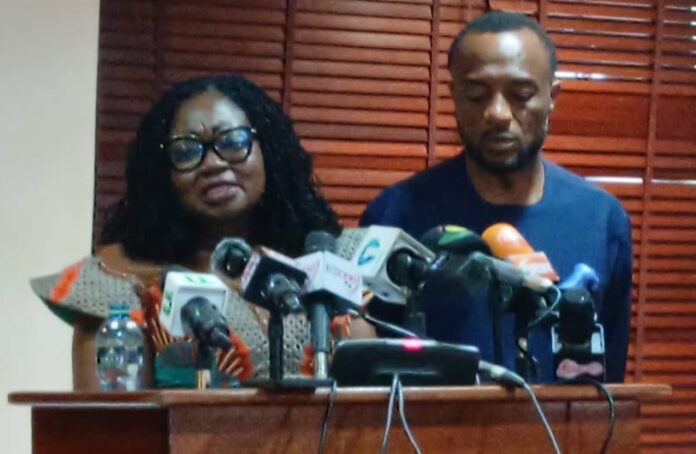
It warned that the scandal exposes deep failures in governance and accountability. Addressing a press conference in Accra on Thursday, the Deputy Minority Leader and Member of Parliament for Asokwa, Hon. Patricia Appiagyei, emphasised that Parliament has a constitutional duty to uncover what the government is allegedly trying to conceal.
“This Parliament has a constitutional duty to investigate what this Government seeks to hide. We call on Parliament to immediately establish bipartisan select committees to investigate the $214 million loss in the Gold-for-Reserves programme.”
Hon. Appiagyei outlined specific demands, including the subpoena of all off-taker contracts, compulsory testimony under oath by officials of GoldBod and the Bank of Ghana (BoG), and a comprehensive review of trading data.
Also read: Assemblies of God, Ghana Supports Brong Ahafo Region “B” With Vehicle donation
“We will demand parliamentary investigations. We will not relent in demanding accountability—not until Ghana is set on a truly sustainable, just, and transparent path,” she stated. She added that the Minority’s push for accountability extends beyond the gold programme.
According to the Deputy Minority leader, the Gold-for-Reserves programme recorded losses of $214 million within just nine months, roughly GH¢2.6 billion. Hon. Appiagyei said, “Two hundred and fourteen million dollars – gone. That money could have built hospitals, equipped schools, and established storage facilities for farmers. Instead, it was lost in a politically connected gold scheme.”
She clarified that while the programme was originally conceptualised and implemented by the previous NPP administration, the losses occurred after a change in government.
“When President Mahama returned to power, he inherited a functioning programme. He politicised it, expanded it recklessly, and placed it in unprepared and potentially conflicted hands. The results speak for themselves,” she asserted.
The Minority cited an IMF report which documented the $214 million loss during the first nine months of 2025, implicating operations involving GoldBod and the Bank of Ghana.
However, GoldBod has publicly denied making losses, claiming it generated over GH¢960 million in revenue against GH¢120 million in expenditure, projecting a surplus of GH¢700–800 million.
Hon. Appiagyei dismissed this explanation as financial misdirection and argued that GoldBod is conflating agency fees with programme performance, emphasising that it can earn fees and still destroy value.
“This is not transparency. This is misdirection. A fund manager can earn millions in fees while the fund itself loses hundreds of millions. That is exactly what is happening here,” she said.
The Minority stated that the IMF specifically identified excessive off-taker fees as a primary driver of losses, arguing that a well-managed programme would have off-taker fees of around two to three per cent. But the IMF found fees far above market rates—fees that destroy value.
She questioned who selected the off-takers and approved the fee structures, suggesting either incompetence or corruption. “Why would any manager agree to excessive fees? Either they do not understand gold-trading economics, or the system was designed to benefit private interests,” she alleged.
The Deputy Leader also raised concerns about the role of the Bank of Ghana Governor, Dr Asiama, insisting that he must answer questions about oversight failures.
“Under the Governor’s watch, these losses occurred. Controls failed. Excessive fees were allowed,” she said.
Hon. Appiagyei questioned why the central bank chose to defend the programme publicly rather than initiate investigations following the IMF findings.
“As Governor, he must answer: what oversight did the Bank provide, when did they become aware of the losses, and why did they deny instead of investigate?”
She warned that the controversy reinforces public fears about selective accountability. “This is the pattern Ghanaians fear – cases are discontinued, scrutiny is resisted, and consequences are rare.”