

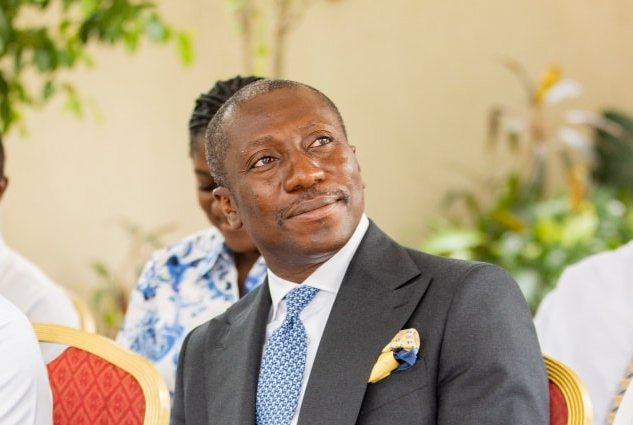

Minority Leader Alexander Afenyo-Markin has announced that the Minority Caucus will push for time-bound parliamentary investigations into major national issues this term.
These, he said, include the helicopter crash that claimed the lives of two ministers; the El-Wak Stadium recruitment tragedy; losses under the Gold-for-Reserves Programme; attacks on journalists; abuse of bail conditions by state agencies; United States visa restrictions on Ghanaians; and the dismissal of youth from public service.
Delivering welcome remarks on Tuesday as Parliament returned from recess for the first meeting of the second session of the 9th Parliament, Afenyo-Markin stressed that accountability must go beyond political rhetoric and be supported by clear timelines and concrete action.
The Minority, he said, would not accept indefinite delays in investigating these issues, insisting that the Ghanaian people deserve transparency and justice.
Also read: Ayariga shreds NPP reforms: NDC will beat Bawumia any day – he claims
“Accountability without a calendar is merely public relations,” he said, stressing the need for urgency in addressing national challenges.
The Minority Leader accused the ruling National Democratic Congress (NDC) administration of economic mismanagement and lack of direction.
According to him, the government has failed to inspire confidence and manage the economy with transformation in mind.
“The New Patriotic Party is not just a political option. It is the single solution Ghana requires,” he declared.
He cited the records of former Presidents John Agyekum Kufuor and Nana Addo Dankwa Akufo-Addo as evidence of the NPP’s track record in national development.
He criticised the government for failing to appoint substantive ministers for the Defence and Environment ministries months after a helicopter crash left the positions vacant.
Afenyo-Markin urged President John Dramani Mahama to urgently nominate replacements, warning that the Finance Minister’s additional responsibility for Defence was unsustainable.
The Minority Leader expressed concern over youth unemployment and recalled the tragic stampede at El-Wak Stadium during a recruitment exercise that claimed six lives.
He described the incident as a sign of deep economic distress and poor governance.
He also highlighted challenges facing farmers, including shortages of fertiliser, certified seeds, machinery, and storage facilities, as well as delays in cocoa payments.
He called for the completion of warehouses initiated under the previous administration and improved food distribution systems.
Afenyo-Markin further noted that rising utility tariffs were worsening living conditions, stressing that Ghanaians are tired of speeches and want real improvements in their lives.
The Minority leader also focused on alleged losses under the Gold for Reserves Programme, citing an International Monetary Fund report indicating losses of about US$240 million by the third quarter of 2025, and claimed that Ghana’s gold reserves dropped sharply within three months.
Linking the situation to weak enforcement against illegal mining, he described the policy as national self-sabotage. “We are monetising the destruction of our environment to feed failing financial schemes,” he said.
He demanded full disclosure on who designed, authorised, and benefited from the programme.
Afenyo-Markin also reaffirmed the Minority’s support for Dr. Mahamudu Bawumia following his election as the New Patriotic Party’s flagbearer for the 2028 general elections.
He disclosed that the caucus had formally congratulated Dr. Bawumia and pledged to work closely with him to return the party to power.
“Our conversation with him has energized us. We spoke as family about the formidable task ahead,” he stated.
He extended what he described as a brotherly salute to other contenders in the NPP’s presidential primary, including Kennedy Agyapong, Dr. Bryan Acheampong, Dr. Yaw Osei Adutwum, and Engineer Kwabena Agyepong, urging unity after the contest.
“The contest is over. Collaboration begins,” he said.
Afenyo-Markin assured the Majority that the Minority would be firm but fair in its oversight role, emphasising that opposition is meant to improve governance rather than undermine it.