


Parliament has passed the 24-Hour Economy Authority Bill, paving the way for the establishment of a statutory body to coordinate and implement the government’s flagship 24-hour economy policy aimed at boosting productivity, job creation, and industrial growth.
The bill, which was approved after extensive debate, seeks to establish the 24-Hour Economy Authority to oversee round-the-clock economic activities across key sectors, including manufacturing, trade, logistics, healthcare, and services.
Majority Leader Mahama Ayariga described the legislation as a critical institutional framework for Ghana’s economic transformation and a major milestone in the government’s agenda to create jobs, particularly for the youth.
Also read: NPP created cocoa crisis, has no moral right to blame NDC – Eric Afful
According to him, the authority will ensure effective coordination among ministries, agencies, and the private sector to make the 24-hour economy policy work for the benefit of the people.
He explained that the policy is expected to stimulate investment, reduce unemployment, and improve productivity by encouraging businesses to operate in multiple shifts.
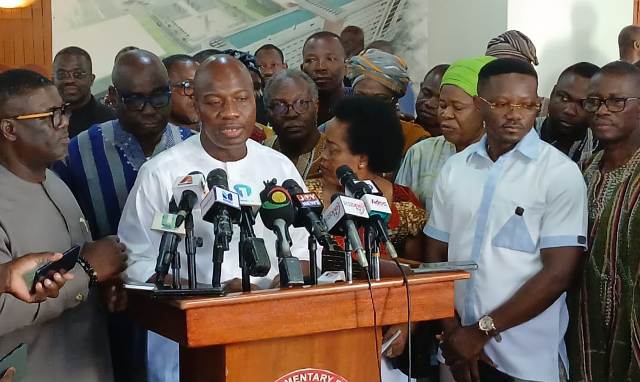
Addressing the media on Friday after the passage, Hon. Ayariga stated, “The National Democratic Congress (NDC) in Parliament is happy to announce to the world that we have just passed the 24-hour economy authority bill.”
“This authority bill gives government the mandate to establish an authority to lead, coordinate, and supervise the implementation of the policy nationwide.”
He noted that the 24-hour economy model is central to the NDC’s promise to create employment and improve livelihoods, particularly for graduates and young people seeking decent work.
Mr. Ayariga explained that operating businesses and institutions in multiple shifts, both day and night, would require additional labour, leading to increased employment.
“If the country is working 24 hours, it means we need more labour. There will be two shifts, three shifts, and several shifts,” he said.
The Majority Leader attributed Ghana’s unemployment challenges to economic difficulties experienced in previous years, including high inflation, currency instability, and excessive taxation.
According to him, the poor economic conditions over the past eight years led to job losses, as several factories relocated to more stable environments, leaving thousands of workers unemployed.
He also referred to the financial sector clean-up, which he said resulted in widespread job losses, affecting hundreds of thousands of people directly and indirectly.
However, the Minority Caucus strongly opposed the bill, arguing that the new authority would duplicate the functions of existing institutions and increase public expenditure.
Ranking Member of the Economy and Development Committee, Kojo Oppong Nkrumah, cautioned against what he described as unnecessary bureaucracy.
“We already have institutions with mandates to promote industry and trade. Creating another authority will only burden the taxpayer without guaranteeing results,” he said.
He urged government to focus on strengthening existing agencies rather than setting up new structures.
“Our concern is not about development. It is about efficiency, value for money, and accountability,” he added.
The Majority side, however, insisted that the authority is essential for the effective rollout of the policy and for ensuring coherence across sectors.