


The government has unveiled an ambitious plan to boost the country’s foreign reserves to the equivalent of 15 months of import cover by 2028, as part of efforts to strengthen economic resilience and prevent a repeat of past financial crises.
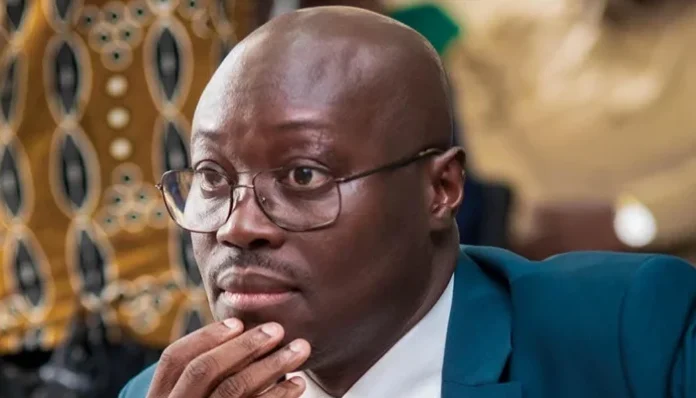
Presenting the Ghana Accelerated National Reserve Accumulation Policy (GANRAP) 2026–2028 in Parliament, Finance Minister Dr. Cassiel Ato Forson revealed that the strategy would help build ‘an economic war chest’ to safeguard the economy against external shocks.
The policy, delivered on the floor of Parliament, outlines a gold-driven approach aimed at increasing reserves without resorting to costly foreign borrowing.
Also read: Poll shows majority of farmers accept new cocoa price
According to the statement, Ghana recorded significant macroeconomic gains in 2025 following the 2022–2023 economic crisis. The economy posted GDP growth of 6.1 per cent in the first three quarters of the year, while inflation declined sharply from 23.8 per cent in 2024 to 3.8 per cent in January 2026. Treasury bill rates also dropped from 27.7 per cent to 6.4 per cent, public debt fell from 61.8 per cent to 45.3 per cent of GDP, and gross international reserves increased to US$13.8 billion.
“These improvements reflect decisive policy actions and renewed investor confidence,” the minister said.
More reserves
Despite the progress, the government acknowledges that the current reserve level of about 5.7 months of import cover remains inadequate in the face of growing global uncertainty. It indicated that the traditional benchmark of three months of import cover is no longer sufficient in today’s volatile economic environment.
The Minister pointed out that Ghana remains exposed to commodity price fluctuations, global geopolitical tensions, climate-related disruptions, regional security risks, and instability in external financing.
According to him, these risks make it necessary to build stronger financial buffers to protect the economy.
Gold strategy
At the heart of the new policy is an aggressive gold accumulation programme driven by the Ghana Gold Board in collaboration with the Bank of Ghana.
Under the plan, Ghana will purchase about 3.02 tonnes of gold every week, with projected annual receipts expected to exceed US$25 billion. The government, Dr. Forson said, intends to acquire about 2.45 tonnes weekly from artisanal and small-scale miners, while 0.57 tonnes will be sourced from large-scale mining firms. The gold will be processed locally to promote value addition before being channelled into official reserves.
“The gold model allows us to accumulate reserves without increasing public debt,” the minister explained.
Learning from debt crises
The statement revealed that between 2017 and 2024, Ghana borrowed more than US$21.7 billion to support reserve accumulation, paying billions of dollars in interest in the process. The Minister admitted that these borrowings failed to stabilise the cedi and instead worsened the country’s debt situation.
The heavy reliance on Eurobonds and short-term swaps eventually led to the 2022 debt default and the subsequent request for international financial support. Since 2023, Ghana has been operating under an arrangement with the International Monetary Fund, which places strong emphasis on fiscal discipline and rebuilding reserves through sustainable means.
Clear targets
The GANRAP policy sets clear milestones for the next three years. Government aims to achieve a minimum of 8.6 months of import cover by the end of 2026, increase this to at least 11.8 months by 2027, and reach the full 15-month target by the end of 2028.
To meet these goals, the state is expected to add an average of about US$9.5 billion annually to its reserves. The Minister noted that these targets will be reviewed each year based on changes in imports, prices, production levels, and financing conditions.
Beyond gold, the government plans to expand foreign exchange inflows through a broad range of structural reforms. These include scaling up non-traditional exports such as cashew, shea, and rubber, reviving productivity in the cocoa sector, promoting large-scale oil palm development, strengthening digital systems to capture diaspora remittances, and accelerating new oil and gas projects.
Energy sector reforms are also expected to reduce the country’s long-standing foreign exchange drain from fuel imports and power payments. According to the minister, maintaining fiscal discipline and sustaining a primary budget surplus will be critical in slowing the pace of reserve depletion.
“Maintaining a primary surplus is essential to protecting our external buffers,” he noted.
Transparency and accountability
To address governance, environmental, and social risks, the policy provides for independent audits, enhanced transparency systems, and stricter regulatory oversight. The Government also plans to intensify anti-illegal mining operations, expand land reclamation programmes, and strengthen community engagement initiatives.
Special task forces will step up efforts to curb mining in water bodies and forest reserves, while sustainability projects will be scaled up to ensure responsible resource management.
The reserve accumulation policy aligns with the broader economic agenda of President John Dramani Mahama, which focuses on macroeconomic stability, debt sustainability, and long-term industrial transformation.
Dr. Forson stressed that the strategy will reinforce confidence in the cedi, improve Ghana’s external credibility, and attract sustained private investment.
According to him, stronger foreign reserves will help stabilise the national currency, reduce inflationary pressures, and lower fuel and food prices. The policy is also expected to cut business costs, improve investor sentiment, and enhance overall living standards.
“These gains translate into real relief for households and enterprises,” he said.
As Ghana charts a new course in reserve management, the Finance Minister assures that the GANRAP policy will mark a turning point in economic governance.
“This policy provides a clear, forward-looking framework to secure Ghana’s future. With discipline and national consensus, we can build lasting prosperity for generations to come,” he stressed.