

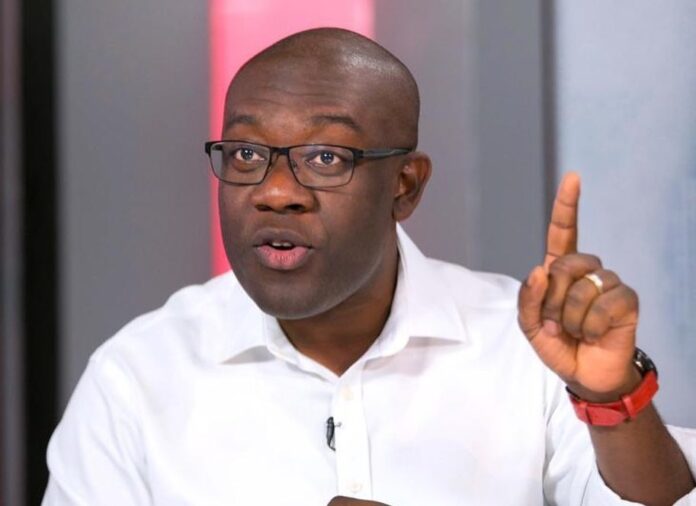

Member of Parliament for Ofoase-Ayirebi, Kojo Oppong Nkrumah, has urged the government to ensure that the recently claimed macroeconomic stability translates into tangible improvements in the lives of ordinary Ghanaians, particularly in terms of jobs and cost of living.
He questioned the narrative that Ghana has exited the International Monetary Fund (IMF), insisting that the country remains within the Fund’s framework through a new arrangement.
He was contributing to a statement by the Minister for Finance on Ghana’s new engagement with the International Monetary Fund (IMF) and the government’s progress in restoring Macroeconomic stability and debt sustainability, delivered on Thursday, 28th May, 2026.
Also read: Former NDC aspirant cries foul over demolition of hotel project at Dansoman
“There was a lot of spin claiming that Ghana has exited the IMF,” he stated. “We are members of the IMF. The ECF programme has ended, and the government is now going for what it calls a Policy Coordination Instrument.”
He argued that government communication on the matter should be clearer and more transparent to avoid public misunderstanding of the country’s engagement with the IMF.
Oppong Nkrumah also raised concerns about parliamentary procedure, stating that the Minority was not given advance copies of the Finance Minister’s statement, which he said limited their ability to prepare an informed response.
Beyond procedural issues, the Ofoase-Ayirebi MP focused heavily on the impact of government policies on ordinary citizens, stressing that economic indicators alone do not reflect the lived reality of Ghanaians.
Many citizens, he said, are more concerned about unemployment and the rising cost of living than macroeconomic stability figures.
“For many people, there are two key things they are looking for. They are looking for jobs and they are looking for the effect of the so-called stability in their lives,” he said.
Citing data from the Ghana Statistical Service’s (GSS) Quarterly Labour Force Survey for Q3 2025, he noted that youth unemployment remains a major concern despite the government’s economic recovery claims.
He indicated that unemployment among persons aged 15 to 24 rose from 32 percent in December 2024 to 32.5 percent in the third quarter of 2025.
He further disclosed that youth unemployment in the Greater Accra Region stood at 49.3 percent, meaning nearly one in every two young people in the region is without employment.
“What it means is that on average, one out of every two young people you meet on the streets of Greater Accra is unemployed,” he noted.
Hon. Oppong Nkrumah added that seven out of every ten unemployed Ghanaians are under the age of 35, describing the situation as worrying for national development and social stability.
He questioned the extent to which the perceived economic stability has impacted livelihoods, arguing that citizens have yet to feel meaningful relief.
The MP also pointed to persistent increases in the cost of essential services, including rent and electricity, stating that these continue to put pressure on households despite headline inflation improvements.
“When you go into the details, service inflation is going up, rent is going up, and electricity is going up. The basic things people spend on every day are going up,” he said.
He also criticised the government’s revenue performance, arguing that despite the introduction of new taxes, fiscal targets have not been met.
Hon. Oppong Nkrumah maintained that while the government highlights macroeconomic gains, the real measure of success lies in whether citizens experience improved living conditions.
“The numbers that matter to Ghanaians in their daily lives are actually getting worse,” he stated.