
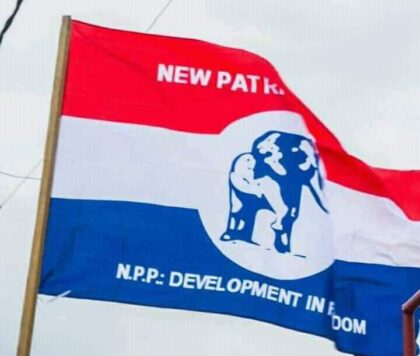

The New Patriotic Party (NPP) has questioned the Mahama government’s GH¢2 diesel price reduction, demanding full disclosure of how the diesel relief will be financed and warning that the relief could create new fiscal and energy sector challenges.
Addressing a press conference in Accra on Tuesday, August 4, Chairman of the NPP Policy Coordination Committee, Kojo Oppong Nkrumah, said the NPP questions the GH¢2 diesel price reduction because it cannot be separated from the recently passed Energy Sector Levies (Amendment) Bill, 2026 and the World Bank’s latest assessment of Ghana’s energy sector reforms.
According to Kojo Oppong Nkrumah, the diesel price reduction should not be presented as a complete solution to rising fuel costs.
Also read: Asiedu Nketiah: Reshuffling Haruna and Muntaka as Minority leaders in 2024 was the right call
He noted that commercial drivers, farmers, fishermen, market women and ordinary commuters continue to struggle with high fuel prices despite the intervention.
“Let us be accurate about what this intervention is. It cushions part of the increase that has already happened. It does not reverse it, and it does not return households and businesses to where they stood eighteen months ago.”
The NPP said petrol sold at approximately GH¢15.13 per litre and diesel at GH¢15.49 per litre in January 2025. By August 3, 2026, GOIL’s pump prices had increased to GH¢15.99 per litre for petrol and GH¢19.26 per litre for diesel.
The party argued that even after the announced GH¢2 reduction, diesel prices would remain significantly above their January 2025 levels.
Energy Sector Levies
The opposition party also criticised the Energy Sector Levies (Amendment) Bill, 2026, arguing that consumers have already paid higher fuel levies for more than a year.
Oppong Nkrumah claimed that while consumers have been paying an additional levy on fuel purchases, the government is now presenting a temporary diesel reduction as relief.
“The GH¢2.00 diesel relief is not generosity. It is a partial, temporary return of money already taken from consumers while the levy that takes it continues to run.”
The NPP further questioned how the government intends to finance the intervention, estimating that the one-month diesel relief could cost approximately GH¢400 million in foregone revenue.
According to the party, any financing gap could either increase the fiscal deficit or create new arrears within the petroleum supply chain.
“There is no free relief. The only question is who pays, and when,” he stated.
The party also expressed concerns about the implementation of the amended energy levies law, particularly the proposed refund mechanism for industry players.
Oppong Nkrumah argued that companies would have to pay upfront before seeking refunds, increasing their working capital burden.
He questioned whether consumers who ultimately bear those costs would also receive refunds.
“If the answer is no, then the refund regime compensates firms while ordinary Ghanaians quietly absorb costs the Minister promised would never reach them.”
World Bank Downgrade Raises Fresh Concerns
The NPP also referenced the World Bank’s downgrade of Ghana’s Energy Sector Recovery Program from Moderately Satisfactory to Unsatisfactory in June 2026.
According to Oppong Nkrumah, combined losses by the Electricity Company of Ghana (ECG) and the Northern Electricity Distribution Company (NEDCo) have increased substantially, raising concerns about stalled reforms and weak governance within the energy sector.
He warned that creating additional hidden revenue losses would worsen Ghana’s energy debt situation rather than resolve it.
Demands to government
The NPP called on the government to:
Publish the full petroleum price build-up before implementing the diesel relief.
Disclose the funding source for the intervention.
Cap the programme at a publicly known fiscal limit.
Publish weekly reports on litres subsidised and revenue foregone.
Target relief at public transport, agriculture, food distribution and fishing instead of a blanket subsidy.
Introduce automatic sunset clauses based on crude oil prices and exchange rate movements.
Ensure prompt payment of industry claims to avoid creating new arrears.
The party also announced plans to pursue parliamentary oversight, monitor energy levy collections, engage transport unions and consumer groups, and propose a transparent framework for future fuel price interventions.
Oppong Nkrumah said the NPP would continue demanding accountability from the government.
Myjoyonline