

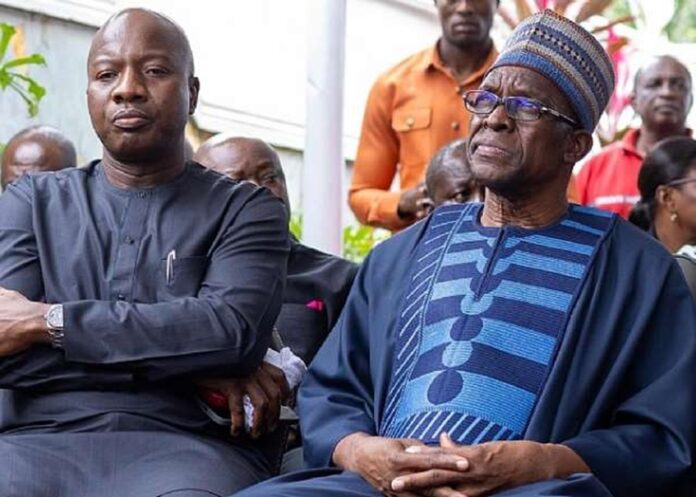

Private legal practitioner Martin Kpebu has suggested that the Mahama Ayariga removal from the position of Majority Leader could be linked to disagreements over the status of Ghana’s Human Sexual Rights and Family Values Bill, commonly referred to as the anti-LGBTQ+ Bill.
According to him, there appears to be a significant disagreement between the Speaker of Parliament, Alban Bagbin, and the former Majority Leader over whether Parliament properly passed the controversial legislation.
Mr Kpebu, however, stressed that his assessment is based on an analysis of recent developments and should not be treated as the official reason given by the government or the governing National Democratic Congress (NDC) for the leadership change.
He was speaking on TV3’s Saturday morning analytical talk show, The Key Points.
Also read: Side effects of drinking wine you never expected
Mahama Ayariga removal
Mr Kpebu noted that Speaker Alban Bagbin has maintained that parliamentary procedures were breached during the passage of the anti-LGBTQ+ Bill, raising questions about its status and whether it can be considered properly passed.
Mahama Ayariga, on the other hand, has maintained that Parliament passed the bill and that the legislation should proceed to the next stage.
“The Majority Leader is the House leader. This is his position that the bill has been passed. The President, go ahead and sign,” Mr Kpebu said.
He argued that the differing positions could make it difficult for President John Mahama and the Speaker to pursue any attempt to bring the bill back to Parliament for reconsideration while Mr Ayariga remained Majority Leader.
“As long as Ayariga remains Majority Leader, it is going to be very difficult to go back and reconsider the bill as the Speaker and President Mahama are saying,” he explained.
Anti-LGBTQ+ Bill creates political dilemma
Mr Kpebu said the disagreement over the bill could therefore constitute a “rational basis” for the Mahama Ayariga removal, although he acknowledged that other considerations may have influenced the decision.
He cautioned against treating his interpretation as a confirmed explanation, stressing that only the government or the NDC can provide the definitive reason for the leadership change.
The legal practitioner also argued that the anti-LGBTQ+ Bill has implications beyond Ghana’s domestic politics because of the international attention it has attracted.
“This is a bill that even when Kamala Harris, U.S. Vice President, came, she had issues with it,” he said.
Mr Kpebu recalled concerns previously raised about the potential effect of the legislation on Ghana’s relationship with development partners and the country’s international partners.
New Majority Leader could change approach
Mr Kpebu further suggested that the appointment of a new Majority Leader could provide the government with greater room to adopt a different approach to the contentious legislation.
He argued that it would be difficult to reconcile Mr Ayariga’s firm position that Parliament has already passed the bill with the Speaker’s position that parliamentary procedures were breached and that the legislation could be reconsidered.
“There’s no way you are going to get Ayariga as Majority Leader and then what the Speaker is speaking about, bringing the bill back for reconsideration, etcetera, would happen under Ayariga’s leadership,” he said.
He nevertheless reiterated that his comments were an interpretation of the political and parliamentary developments rather than confirmation of the government’s motive.
“What I’m saying is that, if you are doing rational analysis, you cannot discount that one,” Mr Kpebu said.
The controversy over the status of the Human Sexual Rights and Family Values Bill remains a major issue in Ghana’s Parliament, with competing interpretations of the parliamentary process continuing to shape the debate over the legislation.