

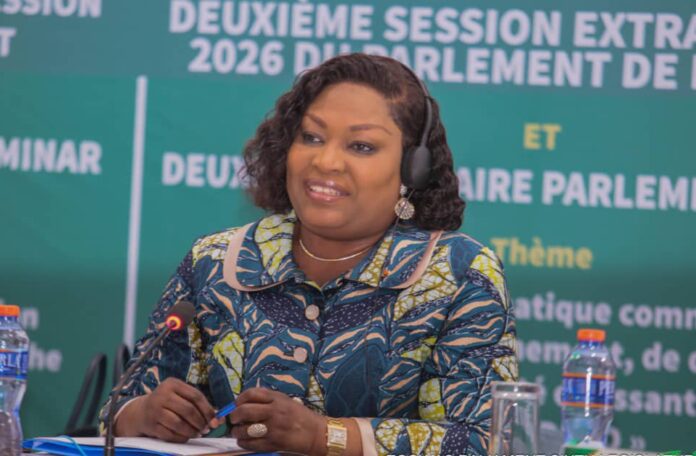

The Economic Community of West African States (ECOWAS) Parliament has closed its Second Extraordinary Session of 2026 in Accra with a renewed call for member states and regional institutions to translate parliamentary decisions into concrete, measurable results for citizens.
President of the ECOWAS Parliament, Hadja Mémounatou Ibrahima, said the credibility of the regional legislative institution in 2027 would depend largely on its ability to turn decisions, resolutions and recommendations into tangible actions that improve the lives of people across West Africa.
She made the call in her closing address on Saturday at the end of the parliamentary session held in Accra from September 21 to 27, 2026.
Also read: What it really means when you can’t do a pull-up
According to her, the discussions during the session were frank and the decisions significant, but the real value of the meeting would be determined by the results that followed.
“The full value of this session lies in the directions it sets and, above all, in the results to which these directions lead,” she said.
A major focus of the session was the Parliament’s annual work programme and draft budget for the 2027 fiscal year.
Hadja Ibrahima said the budgetary process required difficult choices as the Parliament sought to balance its institutional ambitions with the need for prudent and efficient management of increasingly scarce community resources.
She stressed that a budget should not be judged only by the resources allocated to it, but by the quality of its implementation and the results it produces.
She commended the relevant parliamentary committee and members for their contributions to the process.
The 2027 programme is expected to support key regional priorities, including infrastructure, transport, energy and connectivity, while maintaining the Parliament’s commitment to peace, security, democracy and increased participation of women in public life.
“Our ambition remains clear: to ensure that Parliament is engaged with the essential issues facing our region and closely connected to the concerns of its citizens,” she said.
The ECOWAS Parliament Speaker also emphasised the need for effective implementation of resolutions and recommendations adopted by the institution.
According to her, reports from parliamentary committees, meetings and missions had been reviewed during the session, adding that the strength of those decisions would ultimately be measured by their ability to influence public policy and guide regional action.
“The resolutions and recommendations adopted must now be effectively implemented,” Hadja Ibrahima said.
The call comes as West Africa continues to confront interconnected challenges involving economic development, insecurity, democratic governance, climate change and population displacement.
The Second Extraordinary Session also built on discussions held during the ECOWAS Parliament’s Second Parliamentary Seminar of 2026, which examined the relationship between climate change, population displacement and insecurity.
“A key conclusion emerged: our region has no shortage of strategies or tools. It is simply a matter of better implementing them, funding them, and translating them into tangible results for communities,” she said.
She noted that parliamentary responsibility is particularly important at this stage, as legislators have a role to play in ensuring that regional commitments are followed by effective action.
Hon. Hadja Mémounatou Ibrahima expressed gratitude to President John Dramani Mahama for the attention given to the regional institution during its stay in Ghana.
She also thanked Speaker of Ghana’s Parliament, Alban Sumana Kingsford Bagbin, and his office for the support extended to the ECOWAS Parliament.
Special appreciation was also expressed to the Ghanaian Parliament’s Third Deputy Speaker, Alexander Afenyo-Markin, and members of Parliament for what she described as their commitment and availability throughout the session.
Hadja Ibrahima further thanked the ECOWAS Parliament’s members, Secretary-General, staff and others who contributed to the successful organisation of the meeting.
She said the Parliament was leaving Accra with renewed decisions and commitments, stressing that the responsibility now was to put them into practice.
“Our integration is only meaningful if it meets the deep aspirations of our people,” she said and subsequently declared the Second Extraordinary Session of the ECOWAS Parliament for 2026 closed, bringing the Accra parliamentary engagements to an end.