


The United States has expressed readiness to revise its proposed $109 million health compact with Ghana following the government’s rejection of the agreement over concerns about sensitive health data, national sovereignty, and regulatory authority.
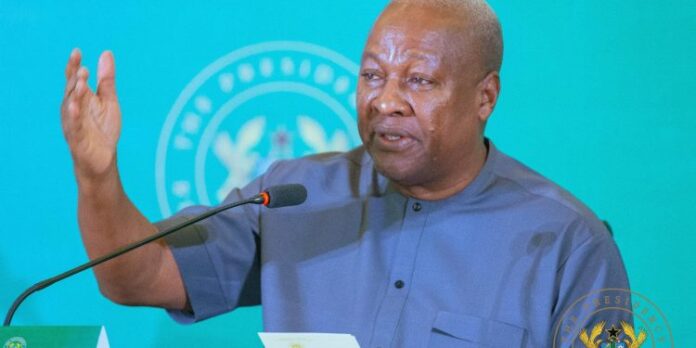
President John Dramani Mahama disclosed that the US government had requested further discussions with Ghana, including proposals to amend or remove clauses that prompted Cabinet to reject the compact.
Speaking at a citizens’ engagement in Goaso in the Ahafo Region, President Mahama said the government is prepared to engage Washington on the disputed provisions but would not proceed without addressing its concerns.
Also read: The plank exercise that can target belly fat faster than crunches
“The health compact the Americans brought to us, I have talked about it when I was in New York, so everyone knows about it. Later, they came back and said they wanted us to sit down and discuss the clauses we object to in the compact, with a view to either amending or removing them. We will sit down with them and discuss,” he said.
The proposed US-Ghana health compact was expected to provide approximately $109 million in American health assistance over five years, replacing some funding previously provided to Ghana through the United States Agency for International Development (USAID).
However, the agreement encountered resistance from the government after a review identified provisions that officials considered potentially harmful to the country’s interests.
President Mahama outlined Ghana’s concerns during a dialogue hosted by the Council on Foreign Relations in New York on September 25, 2026.
He explained that the Ministry of Health had reviewed the proposed agreement and submitted an information paper to Cabinet in accordance with established government procedures.
The review identified several contentious clauses, including requirements relating to the disclosure of Ghana’s pathogen profile and access to medical records.
The pathogen profile contains information about disease-causing organisms circulating within the country, making its disclosure a sensitive issue for public health security and national data governance.
President Mahama questioned why Ghana would be expected to share such information and patients’ medical records with another country under the proposed arrangement.
“It states that we shall give the United States our pathogen profile. I’m sure medical experts understand that better than me. And it also says we should give our medical records. I mean, who takes another country’s medical records?” he asked.
Beyond data protection, the President said the proposed compact contained conditions relating to Ghana’s financial contribution and the regulatory authority of the Food and Drugs Authority (FDA).
According to him, the agreement required Ghana to commit its own funds to the programme while restricting the FDA’s authority to inspect medicines and other medical products brought into the country under the arrangement.
The concerns raised questions about whether the proposed assistance could compromise Ghana’s ability to independently regulate medical products and safeguard public health.
Describing the conditions attached to the agreement, President Mahama said: “I mean, it was humiliating.”
Cabinet subsequently rejected the compact, with the government deciding not to proceed under the original terms.
The US request to revisit the disputed clauses could provide an opportunity for both countries to resolve their differences and reach an agreement acceptable to Ghana.
President Mahama’s latest disclosure indicates that discussions remain possible, although the outcome will depend on whether the concerns identified by Cabinet can be adequately addressed.