

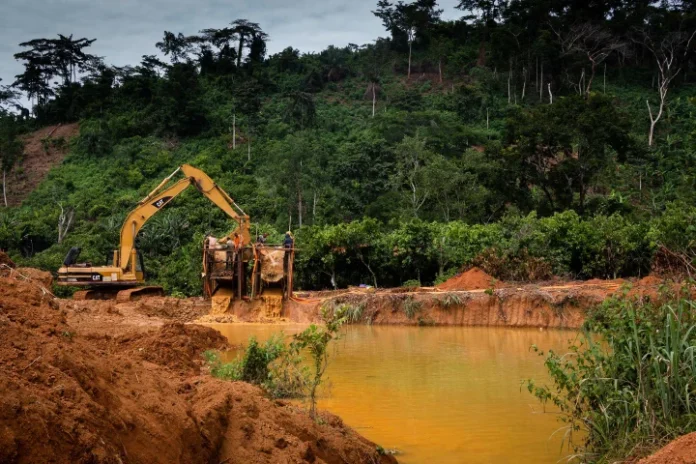

The Ghana Gold Board (GoldBod) has partnered with the Ghana Armed Forces Engineer Regiment to restore portions of the Tano Nimri Forest Reserve devastated by illegal mining.
The GH¢35 million land reclamation project targets 60 hectares of degraded land in Compartment 161 of the reserve, following years of illegal mining activities that contributed to the destruction of approximately 192.4 hectares of woodland between 2021 and 2024.
The initiative brings together GoldBod’s environmental restoration efforts and the military’s engineering expertise to address the physical damage caused by galamsey and prepare the affected land for reforestation.
Also read: GoldBod launches GH¢35m project to reclaim Tano Nimri Forest Reserve
Samuel Danso, Sustainability Manager, said illegal mining had left deep excavations, unstable ground and extensive environmental degradation, making natural recovery difficult without substantial engineering intervention.
The Ghana Armed Forces Engineer Regiment is leading the heavy earthmoving and civil engineering phase under the command of Major Shem Adolinama.
The ongoing operations include filling dangerous mining pits, stabilising the soil and reshaping the landscape to create conditions suitable for future vegetation growth.
Engineers are also constructing drainage channels to manage water flow and reduce the risk of sediment entering the Tano River.
These interventions are intended to address both the visible destruction caused by illegal mining and the underlying soil and water management challenges that could hinder the forest’s recovery.
The reclamation works are expected to improve the stability of the degraded land and prepare it for the next phase of environmental restoration.
With the major engineering activities nearing completion, the site is undergoing final grading and preparation for handover.
GoldBod and the military engineering team are expected to hand over the reclaimed 60-hectare area to the Forestry Commission in the coming weeks.
The Commission will lead the subsequent reforestation phase, including tree planting and efforts to encourage the regeneration of indigenous vegetation.
The handover will mark the transition from civil engineering works to the ecological restoration of the affected land.
Although the current project covers 60 hectares, the reported destruction of 192.4 hectares of woodland underscores the wider environmental damage associated with illegal mining in the reserve.
The success of the reclamation initiative will depend not only on restoring the land’s physical condition but also on the survival of newly planted trees and sustained protection against renewed encroachment.
GoldBod says the project reflects its commitment to environmental responsibility and the need for coordinated national action to reverse the damage caused by galamsey.
The partnership also demonstrates how cooperation between public institutions can support efforts to rehabilitate degraded natural assets.
The Board maintains that preparing the reclaimed land for sustainable restoration is essential to the long-term recovery of the Tano Nimri Forest Reserve.