

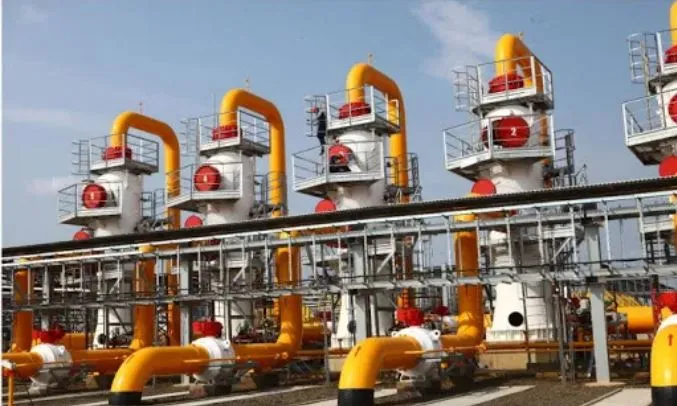

The Ghana National Gas Company Limited (Ghana Gas) is planning to construct a 278-kilometre high-pressure gas pipeline from the Western Region to Tema to expand gas transportation capacity, reduce reliance on the West African Gas Pipeline, and support industrial development.
The proposed 20-inch pipeline is expected to connect industries in the Western, Central, Eastern and Greater Accra regions to Ghana’s national gas network, improving access to gas for electricity generation and industrial operations.
Ghana Gas Chief Executive Officer (CEO), Judith Adjobah Blay, announced the project at a media soirée in Accra last Saturday, following a training session organised by the company to strengthen journalists’ capacity to report on the oil and gas industry.
Also read: GH¢49.72m evacuation row: NPP gives Ablakwa 7 days to produce expenditure records
She said the company is targeting the end of 2026 to take a final investment decision on the pipeline, which is expected to improve gas transportation and support industrial growth along its route.
The project forms part of Ghana Gas’s broader efforts to strengthen the country’s gas infrastructure and improve the reliability of supply to industries and power producers.
Ms Blay also announced plans to procure a third compressor to improve operational efficiency and minimise disruptions during maintenance.
The procurement process, she said, is nearing completion, with construction expected to take approximately 18 months.
The additional compressor is expected to strengthen operational reliability and help the company maintain gas supply during maintenance activities.
On production, the CEO disclosed that Ghana Gas’s gas processing capacity has increased from 100 million standard cubic feet per day to 130 million standard cubic feet per day.
The increased capacity is expected to support electricity generation and meet the needs of industrial consumers.
Ms Blay further revealed that the company’s profit has increased by 97 per cent, although the appreciation of the cedi has reduced the local currency value of its dollar-denominated revenue.
The company is also preparing to commercialise pentane and isopentane recovered at its Atuabo facility, a move expected to generate additional revenue while reducing gas flaring.
Ms Blay said Ghana Gas is strengthening its sustainability agenda through an Environmental, Social and Governance (ESG) department established to improve environmental protection, community welfare and responsible operations.
She added that the company’s Eco Brigade beach-cleaning initiative in Ellembelle, in the Western Region, is supporting 250 people, approximately 90 per cent of whom were women.
Ghana Gas plans to promote youth entrepreneurship through pilot greenhouse farming projects in Ellembelle and Sekondi.
The CEO explained that the media engagements are intended to improve journalists’ understanding of gas processing, transmission, safety and other technical aspects of the company’s operations.
She urged journalists to seek clarification whenever necessary, assuring them that Ghana Gas remained open to the media to promote accurate and responsible reporting.
President of the Ghana Journalists Association (GJA), Albert Kwabena Dwumfour, commended the company for supporting professional development through specialised energy reporting training.
He said continuous capacity building was essential in a rapidly evolving digital environment increasingly challenged by misinformation and disinformation.
Mr Dwumfour urged participants to share their knowledge with colleagues and apply the lessons to their reporting.
He also disclosed that the GJA is pursuing professional development scholarships and exchange programmes to help journalists upgrade their qualifications and specialise in energy reporting.