

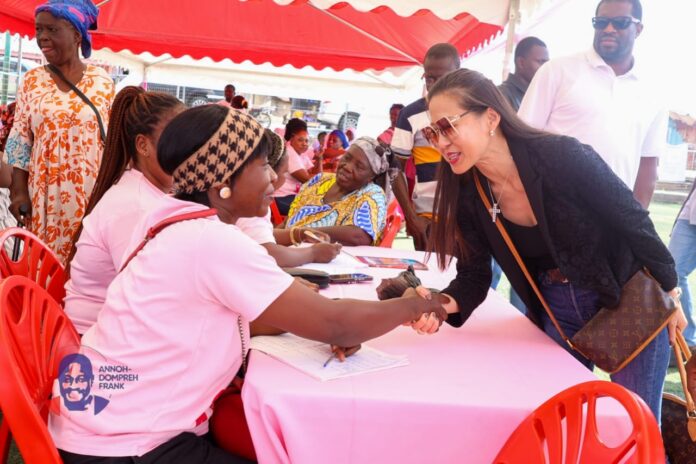

Hundreds of women in the Nsawam-Adoagyiri Constituency have benefited from a free breast cancer screening exercise organised by the Minority Chief Whip and Member of Parliament for the area, Frank Annoh-Dompreh, in collaboration with Partners for Patients NGO.
The three-day initiative, held at Cocoa Park in Adoagyiri from Monday, October 26, to Wednesday, October 28, 2026, aimed to improve access to healthcare, promote breast cancer awareness and encourage early detection among women in the constituency.
The exercise attracted women from several communities, with participation increasing as news of the free breast cancer screening spread and more residents arrived to access the service and receive professional health advice.
Also read: Parliamentary Press Corps proposes fair rotation system to end media selection disputes
The initiative forms part of Mr Annoh-Dompreh’s efforts to support the health and welfare of his constituents, particularly by facilitating access to essential healthcare services and preventive health interventions.
A major feature of the programme was the participation of doctors and other health professionals from Partners for Patients NGO, who joined the exercise on Wednesday to examine participants and provide guidance on breast cancer prevention and awareness.
Beyond the medical examinations, the professionals educated women on the importance of early detection, the need to pay attention to unusual breast changes, and the importance of seeking medical attention when abnormalities are noticed.
The education sessions were designed to equip participants with practical information about breast health and encourage them to take preventive healthcare seriously.
Breast cancer awareness and early detection remain important aspects of women’s healthcare, as recognising unusual changes and seeking timely medical assessment can help identify problems that require further investigation.
The programme therefore combined screening services with health education to help participants make more informed decisions about their wellbeing.
The free breast cancer screening exercise also attracted participation from schools and other community members, extending the reach of the awareness campaign beyond women who directly accessed the medical services.
Their involvement highlighted the importance of community-wide education in promoting preventive healthcare and encouraging greater awareness of breast cancer.
Several beneficiaries expressed appreciation to Mr Annoh-Dompreh for facilitating the programme, noting the value of bringing screening opportunities and professional health advice closer to residents.