
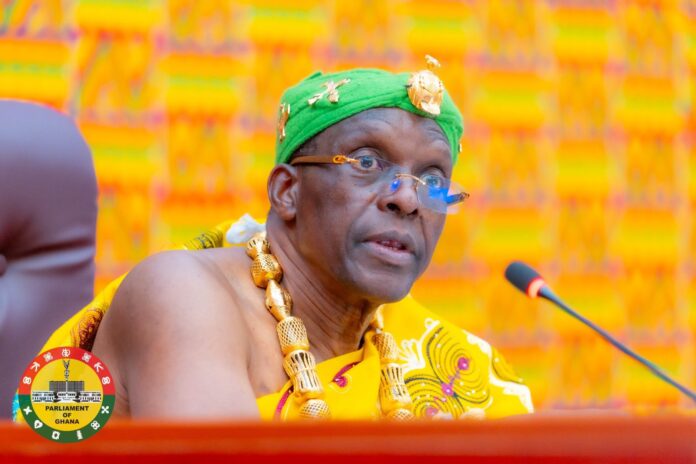

Speaker of Parliament Alban Sumana Kingsford Bagbin has directed that an internal administrative review into allegations of bribery surrounding the approval of the AKSA Energy Emergency Power Agreement be submitted to the Office of the Special Prosecutor (OSP) to support investigations.
The decision follows allegations that approximately $46,000 was paid to persons associated with Parliament to facilitate approval of the agreement between the Government of Ghana and Turkish energy company AKSA Energy Eurotem AS.
Addressing Parliament on Wednesday, November 11, 2026, Mr Bagbin said the internal review, which he commissioned after the allegations emerged in August 2026, had been completed and its report submitted to him.
Also read: Major relief: 2027 Budget promises zero new taxes
He explained that the review examined parliamentary records, including Votes and Proceedings, official reports, committee records, the report of the Committee on Mines and Energy and the resolution approving the agreement.
It also involved interviews with some former and serving Parliamentary Service officers and a former chairman of the Committee on Mines and Energy.
The Speaker said he had directed the Clerk to Parliament to preserve all relevant parliamentary records, correspondence and documents and make them available to the OSP and other competent investigative authorities whenever required.
He emphasised that the review was administrative and not a criminal investigation, adding that it lacked the authority to examine bank records, financial transactions and external communications.
Mr Bagbin assured the OSP and other relevant authorities of Parliament’s full cooperation, insisting that the institution would neither obstruct nor interfere with investigations.
“Parliament has no interest whatsoever in shielding any person who may have engaged in bribery, corruption or other unlawful conduct,” he declared.
He stressed that investigators must follow the evidence wherever it leads and ensure that anyone found culpable is held accountable under the law.
The Speaker also urged MPs across the political divide to recognise that protecting Parliament’s reputation was a collective responsibility.
The allegations, he said, should prompt stronger transparency and accountability, particularly in parliamentary consideration and approval of agreements involving substantial public resources.
Background
The allegations against the Ghanaian officials emerged from proceedings in the United States involving Asante Kweku Berko, a former Goldman Sachs executive and former Managing Director of the Tema Oil Refinery.
A US State Department statement announcing Berko’s conviction indicated that he and his associates were involved in paying more than US$1 million in bribes to Ghanaian government officials between 2015 and 2016 in connection with the development and financing of the AKSA power project.
The proceedings also indicated that US$46,000 was allegedly paid to members of Ghana’s Parliament to facilitate the approval of the agreement.
KT Hammond, who was the Ranking Member of Parliament’s Energy Committee at the time, rejected the allegations.
He questioned how the alleged US$46,000 could have been shared among the 18 MPs on the committee and its secretariat staff, suggesting that the amount would translate into relatively small sums for each person.
“Is KT Hammond that bloody cheap?” he asked, dismissing the suggestion that he and other committee members could have been induced with the alleged payments.
Parliament’s records indicate that the AKSA Emergency Power Agreement was laid before the House on June 23, 2015, and referred to the Committee on Mines and Energy for consideration.
The committee presented its report on July 16, 2015, before Parliament debated and approved the agreement on July 17, 2015.