

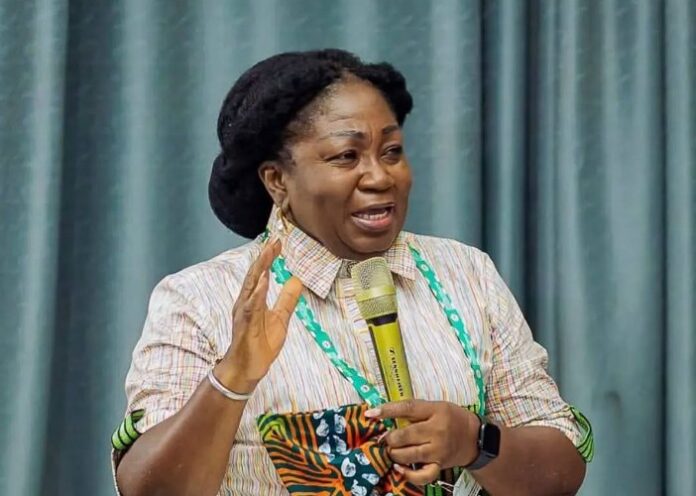

Deputy Minority Leader Patricia Appiagyei has appealed to the government to urgently implement a comprehensive national preparedness plan to protect Ghana against the potential effects of the impending 2026–2027 El Niño phenomenon.
She warned that the climate event could trigger prolonged dry spells, extreme heat, water shortages and bushfires, with serious consequences for agriculture, public health and electricity generation, particularly in northern Ghana.
Delivering a statement in Parliament on Wednesday, November 11, Hon. Patricia Appiagyei cited a national assessment issued by the Ghana Meteorological Agency (GMet) on October 30, 2026, titled The developing very strong El Niño event (2026–2027): Implications for Ghana and recommended national preparedness measures.
Also read: Eswatini gives illegal foreign businesses 12 months to leave
The assessment projects a hotter and drier dry season, with heat stress expected to peak between February and April 2027.
According to the MP, the potential effects could threaten farmers’ livelihoods, reduce food production, strain water resources and worsen the vulnerability of disadvantaged communities.
She recalled Ghana’s experience with previous El Niño episodes, particularly the devastating drought of 1982–83, warning that the country must not wait until the impacts become visible before taking action.
“Uncertainty must not become an excuse for inaction,” she stressed.
The Deputy Minority Leader urged the Ministry of Food and Agriculture to provide farmers with drought-tolerant and early-maturing seeds, timely weather information, irrigation facilities and water-harvesting systems to safeguard food production.
She also called on the Ministries responsible for Water Resources and Energy, together with the Volta River Authority, to monitor water levels and inflows into the Volta Lake and develop contingency plans to protect electricity generation.
On public health, the Asokwa MP asked the Ministry of Health and the Ghana Health Service to strengthen heat-health preparedness, meningitis surveillance and the availability of essential medicines and vaccines, particularly in northern Ghana.
She urged NADMO and local authorities to intensify bushfire prevention campaigns, replenish emergency supplies and strengthen community-level early warning systems.
She also recommended the activation of a National El Niño Preparedness Task Force, with clear responsibilities, adequate funding, measurable targets and regular reporting to Cabinet and Parliament.
Hon. Patricia Appiagyei cautioned that El Niño preparedness must not replace flood prevention measures, noting that intense downpours could still cause flooding in Accra, Kumasi and other urban centres.
“Prevention and preparedness are far less costly than responding to a national crisis,” she said.
She appealed to citizens to conserve water, protect themselves against extreme heat and follow official forecasts from GMet and NADMO.
“The warning has been issued. The science has provided us with valuable lead time. What remains is the political will, institutional coordination and practical action to turn that warning into protection for our people,” she added.
Following contributions to the statement by MPs, Speaker of Parliament Alban Sumana Kingsford Bagbin directed the Committee on Defence and Interior to urgently investigate Ghana’s preparedness for the impending 2026–2027 El Niño phenomenon.
Mr. Bagbin described the warning by the Ghana Meteorological Agency (GMet) and the concerns raised by Patricia Appiagyei as timely, stressing that Parliament must ensure that the country takes preventive action rather than wait for a disaster to occur.
He urged Parliament to scrutinise allocations in the 2027 Budget, particularly the contingency vote, to establish whether adequate financial resources had been earmarked to respond to emergencies associated with the climate phenomenon.
The Speaker warned that the El Niño cycle, which traditionally occurs every two to seven years, appears to be becoming shorter, making the threat more urgent.
He cited concerns about deaths linked to extreme heat in Germany to illustrate the seriousness of heatwaves, urging MPs and relevant state institutions to rise to the challenge.
He directed the Committee to invite the National Disaster Management Organisation (NADMO) to brief Parliament on measures being taken to mitigate its potential impact.
He also directed the committee to invite the relevant minister-led team to provide a comprehensive briefing and reminded MPs that government officials invited to parliamentary committees must respect their summons, pointing to provisions in Parliament’s Standing Orders governing such appearances.