


The International Monetary Fund (IMF) says Ghana is beginning to reap the benefits of difficult economic reforms, with stronger-than-expected growth, single-digit inflation and an improved fiscal position.
However, the Fund says the next priority must be to strengthen the economy’s resilience to withstand future shocks and sustain the gains made under the previous IMF-supported programme.
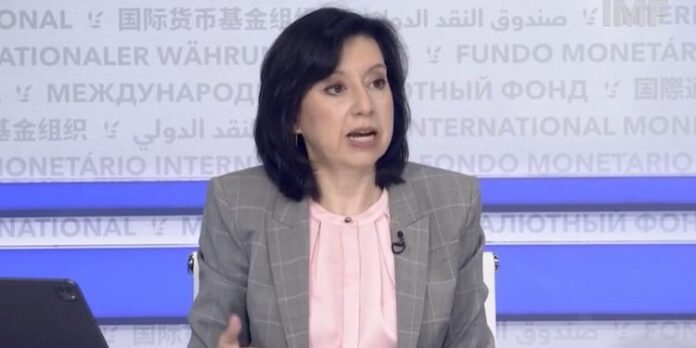
Speaking at a news conference in Washington, DC, IMF Director of Communications Julie Kozack said policy decisions taken by the Ghanaian authorities under difficult economic conditions were now yielding results.
Also read: Review NAIMOS operations or risk sending NDC back to opposition – Amoakohene
“We’ve also seen a willingness by the authorities to undertake some very difficult policy decisions,” she said.
According to her, those decisions are now supporting improvements in economic stability and strengthening the country’s overall economic position.
“Those are now bearing fruit, as I said, in terms of stability and the strength of the economy,” she added.
Kozack said Ghana’s economic recovery had been supported by extensive engagement with stakeholders beyond government.
She pointed to social dialogue and public consultations as important parts of the reform process, helping authorities explain difficult policy decisions, receive feedback and understand broader national priorities.
On economic performance, she said Ghana’s economy expanded by 6 per cent last year, while the IMF projects growth of 5.7 per cent this year.
She also cited improvements in the country’s external position, a reduction in inflation to single digits and a public debt-to-GDP ratio of around 50 per cent.
Kozack further described Ghana’s fiscal position as strong, noting that the primary surplus was on track to meet the year-end target.
IMF engagement shifts towards long-term resilience
Kozack said the Fund’s engagement with Ghana was evolving as the country moved away from immediate crisis management towards consolidating reforms and strengthening its economic foundations.
The shift is reflected in Ghana’s decision to pursue a Policy Coordination Instrument (PCI) following the completion of its three-year, US$3 billion Extended Credit Facility programme.
She explained that the previous programme focused largely on responding to the economic crisis, while the new arrangement would support the consolidation of reforms and help build longer-term resilience.
The PCI does not provide direct financing. Instead, it offers a framework for policy engagement and monitoring of the country’s economic reform agenda.
Ghana must guard against future shocks
Despite the improvements, Kozack said Ghana must sustain the reform momentum and strengthen its capacity to withstand external and domestic economic shocks.
She recalled the difficult economic conditions the country faced only a few years ago, noting that the current improvements represented a significant change in the country’s economic environment.
“Even a few years ago, I think the mood in Ghana was more difficult. It was a hard time for the country; it was a hard time for the people,” she said.
She stressed that the next phase of the recovery must focus on protecting the gains made and building a more resilient economy.
“The focus is really on strengthening and bolstering that resilience that comes next for the country,” she added.
CNR