

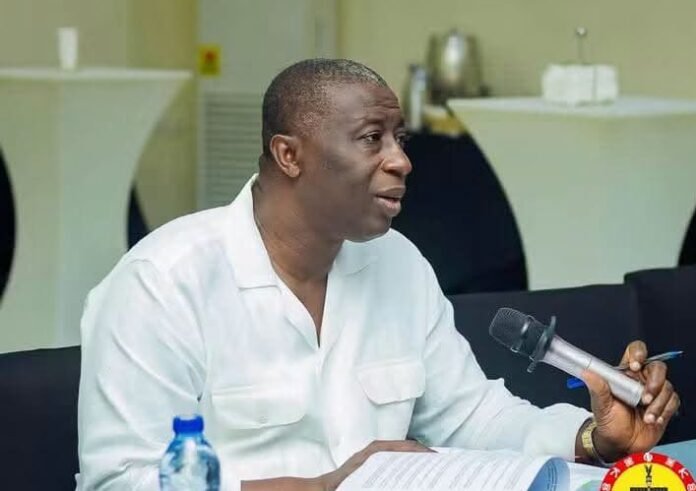

The Member of Parliament for Okaikoi Central, Patrick Yaw Boamah, has challenged Finance Minister Dr Cassiel Ato Forson to explain the GH¢100 million allocation for judgment debt payments in the 2027 Budget.
He questioned whether the government anticipates additional legal liabilities.
He urged the government to strengthen measures to prevent judgment debts from accumulating, insisting that state institutions must honour contractual obligations to avoid exposing taxpayers to unnecessary financial liabilities.
Also read: ‘Stop the propaganda’: Prof Beyuo fires back at Minority over health sector recruitment claims
Contributing to the 2027 Budget debate in Parliament, Mr Boamah drew attention to the GH¢100 million provision captured in Appendix 4A of the budget, demanding clarity on the basis for the allocation.
“The Minister allocated GH¢100 million as a line in the budget for the payment of judgment debts. A whopping GH¢100 million. What is the Minister anticipating?” he questioned.
The Okaikoi Central MP cited an outstanding judgment debt of more than GH¢680 million involving the Ghana Revenue Authority (GRA) and Safaritech, asking whether the Finance Ministry had taken steps to prevent further liabilities.
He also mentioned other outstanding judgment debt cases involving Ghana Water Company Limited and Abengoa, as well as Tullow Oil Ghana.
Mr Boamah expressed concern about the government’s proposed amendment to the State Proceedings Act, 1998 (Act 555), particularly provisions relating to the attachment of funds in the Contingency Fund and Consolidated Fund to satisfy judgment debts.
He argued that the government must prioritise honouring contracts rather than introducing measures that could complicate the recovery of money owed by the state.
“The government must respect the contracts that they enter into. State institutions must respect contracts to prevent the occurrence of judgment debts,” he told Parliament.
He questioned the responsibility of the Finance Minister in addressing the GRA’s financial exposure, noting that the authority operates under the Ministry of Finance.
According to him, the government must demonstrate a clear commitment to preventing contractual breaches and ensuring that public institutions fulfil their financial obligations.
Mr Boamah’s concerns formed part of his broader assessment of the 2027 Budget, during which he also questioned the proposed GH¢30 billion allocation for the New Economy programme and called for stronger support for Ghanaian businesses.
He maintained that effective public financial management requires transparency, respect for contractual obligations and stronger parliamentary scrutiny to protect public resources.
The GH¢100 million judgment debt provision, he said, requires further explanation from the Finance Minister to establish whether it reflects anticipated liabilities or measures to settle existing claims.