

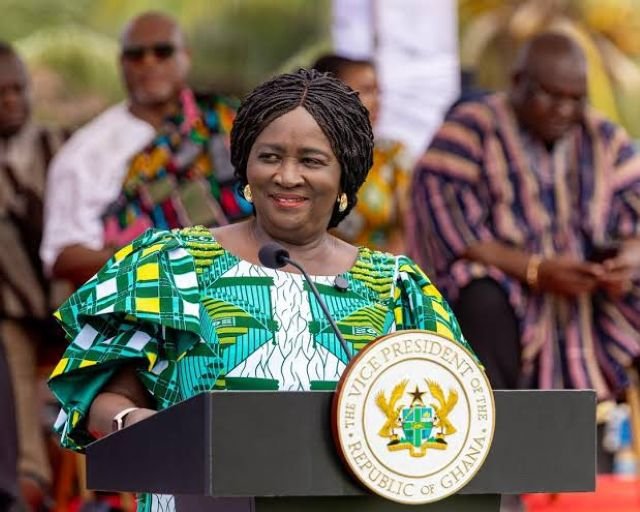

Ghana’s inland fisheries face growing threats from illegal mining pollution, unsustainable fishing practices, and climate change, Vice President Professor Naana Jane Opoku-Agyemang has warned.
According to her, the increasing destruction of fish breeding and nursery grounds, pollution, and poorly managed waste disposal are undermining aquatic ecosystems, affecting water quality, and raising concerns about the safety of fish consumed by Ghanaians
The Vice President raised this alarm at the 2026 National Inland Fisheries Conference in Sunyani, Bono Region, held as part of activities marking World Fisheries Day.
Also read: Elliot Anderson rescues Man City point against Fulham
She called for urgent action to protect Ghana’s inland water resources, particularly the Volta Lake, which sustains numerous communities through fishing and related economic activities.
Professor Opoku-Agyemang warned that illegal mining pollution and other environmental pressures are putting the productivity and long-term sustainability of Ghana’s inland fisheries at risk.
She stressed that protecting aquatic ecosystems was essential to safeguarding fish stocks, food security and the livelihoods of fishing communities.
The Vice President also expressed concern about the exploitation of children in hazardous fishing activities, insisting that child protection must remain a central part of the country’s fisheries development agenda.
“Protecting children must remain an integral part of our fisheries development agenda,” she emphasised.
She said effective enforcement of fisheries regulations, responsible resource management and increased investment in fishing communities are necessary to address the challenges facing the sector.
The Vice President identified the Fisheries and Aquaculture Act, 2025, as an important legal framework for improving governance, conservation and management of Ghana’s fisheries resources.
She also called for the effective implementation of the National Inland Fisheries Management Plan, which promotes science-based fisheries management, protection of breeding and nursery grounds, monitoring and surveillance, and active participation by local communities.
Professor Opoku-Agyemang urged the Ministry of Fisheries and Aquaculture to collaborate with the Fisheries Commission, traditional authorities, local government institutions and other stakeholders to turn recommendations from the conference into practical measures.
She said clear institutional responsibilities, adequate funding and effective monitoring would be crucial to achieving measurable results.
The Vice President said sustainable fisheries management must be supported by investments in infrastructure to improve fish preservation, processing and marketing.
According to her, the government is pursuing plans to transform jetties and wharves into integrated fishing villages, equipped with improved landing sites, cold storage facilities, fish processing centres and organised markets.
A modern fish market is also planned for Dambai to improve fish handling, hygiene, storage and trading conditions.
The Vice President acknowledged proposals from traditional authorities along the Volta Lake aimed at improving the management and development of inland fisheries.
Local knowledge and experience, she said, must be combined with scientific research and the technical expertise of the Fisheries Commission to ensure the effective management of inland water resources.
Professor Opoku-Agyemang subsequently declared the 2026 National Inland Fisheries Conference officially open.
She commended fishers, fish farmers, processors, traders and other stakeholders for their contribution to Ghana’s fisheries and aquaculture sector, while urging them to support efforts to protect the country’s inland fisheries for future generations.