
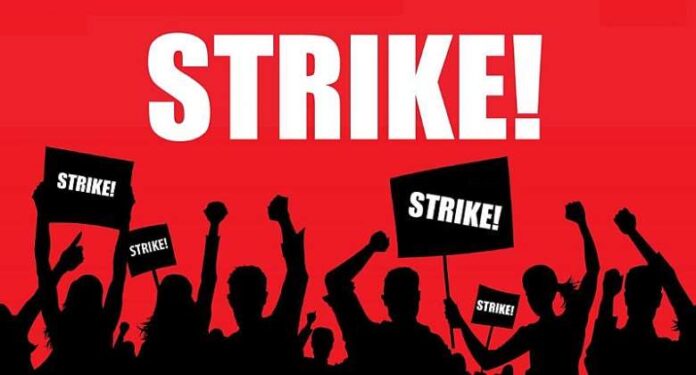

The General Transport, Petroleum and Chemical Workers’ Union (GTPCWU) of the Trades Union Congress (TUC), Ghana, has threatened a nationwide strike over the NPA Bill, 2026, if Parliament passes the proposed legislation in its current form.
The Union says the bill could undermine the operations of the Bulk Oil Storage and Transportation Company Limited (BOST), weaken Ghana’s energy security and put hundreds of jobs at risk.
At the centre of the dispute is Clause 103 of the National Petroleum Authority (NPA) Bill, 2026, which seeks to remove BOST’s exclusive mandate to develop, operate and maintain inland petroleum depots, potentially allowing private operators to enter the sector.
Also read: Presidency orders state CEOs past retirement age to vacate office
Speaking at a press briefing on Monday, November 23, GTPCWU Chairman Bernard Owusu warned that organised labour would not hesitate to take industrial action if Parliament fails to address its concerns before the bill is passed.
He said the Union is prepared to mobilise workers at BOST Energies and across the downstream petroleum sector to resist what it considers a threat to the company’s operations and the livelihoods of its employees.
“If the concerns remain unresolved and the bill passes in its current form, the union will mobilise its members at BOST Energies and across the downstream petroleum sector for a nationwide strike. It may also take further industrial actions with dates to be announced,” he said.
The Union’s opposition centres on the potential consequences of opening the development and management of inland petroleum depots to private investors.
GTPCWU maintains that BOST plays a strategic role in Ghana’s petroleum supply chain and that any changes to its mandate must take into account the company’s contribution to national energy security, petroleum storage and employment.
The labour group is therefore calling on Parliament to reconsider Clause 103 and address the concerns raised by organised labour before the legislation is passed into law.
It argues that reforms in the downstream petroleum sector should not come at the expense of a state-owned institution with a critical responsibility in the country’s energy infrastructure.
The Union has warned that failure to resolve the dispute could trigger industrial unrest across the downstream petroleum sector, with a nationwide strike potentially disrupting operations.
The threat places pressure on Parliament to engage stakeholders and carefully examine the implications of the proposed changes to BOST’s statutory mandate before making a final decision on the NPA Bill, 2026.