

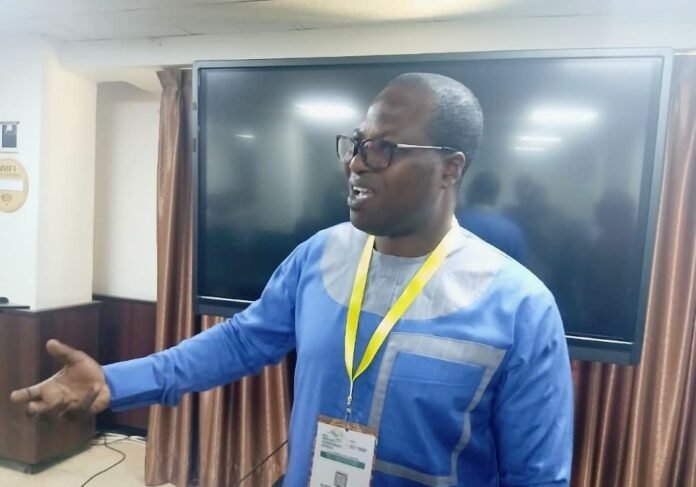

Ghana’s Data Protection Commission (DPC) has warned that Africa’s rapidly expanding digital economy cannot survive on unchecked data extraction and secondary exploitation.
Speaking at the Masterclass ahead of the 8th Privacy Symposium Africa (PSA 2026) in Accra on Wednesday, November 25, 2026, Quintin Akrobotu, DPC’s Director of Regulatory and Compliance, urged policymakers, regulators, and tech leaders to prioritize responsible data governance over mere monetization.
Addressing delegates on behalf of the Commission’s Executive Director, Dr. Arnold Kavaarpuo, Mr. Akrobotu emphasized that public trust is the bedrock of sustainable digital progress.
Also read: ‘Please, cut the crap’ – Kabiru Tiah slams Ato Forson over GH¢129bn debt surge, ‘rebranded’ budget
The 8th Privacy Symposium Africa (PSA 2026) takes place under the theme “Money. Data. Control.”, featuring dedicated masterclasses alongside main symposium sessions.
It is co-hosted by Ghana’s Data Protection Commission and Unwanted Witness, alongside key partners, the Media Foundation for West Africa (MFWA) and the Hewlett Foundation.
Day one of the event featured specialized master classes and expert engagements designed to bridge the gap between high-level legislation and everyday corporate compliance.
The Journalists & Digital Media Masterclass was designed for 50 selected journalists and digital media actors to investigate the financial incentives, power structures, and actors driving Africa’s data economy.
Mr. Akrobotu stated, “Data-driven growth cannot be sustainable if trust is eroded through unchecked extraction, secondary exploitation, or weak safeguards. True progress requires balancing innovation with enforceable rights, transparency, and regulatory clarity.”
The two-day continental gathering brings together regulators, civil society, and industry experts to interrogate how personal data is collected, monetized, and governed across Africa.
Mr. Akrobotu noted that as personal information becomes an increasingly lucrative economic asset, the continent must confront fundamental questions of ownership and accountability:
• Who actually benefits from personal data?
• Who holds control over it?
• Who protects the fundamental rights of the individuals behind the data?
“Let us end this symposium with a renewed understanding that the future of Africa’s digital economy must not be defined only by how much data we generate or the economic value we extract from it, but also by how responsibly we govern it and how effectively we protect the people behind the data we use,” he added.
Mr. Akrobotu stressed that conferences only succeed when insights translate into stronger institutional capacity, better system design, and practical safeguards for citizens.