


A quiet but critical battle for public safety is being waged—not against contraband in the traditional sense, but against a surge of substandard electrical appliances and renewable energy products that threaten to turn Ghanaian homes into hazard zones.
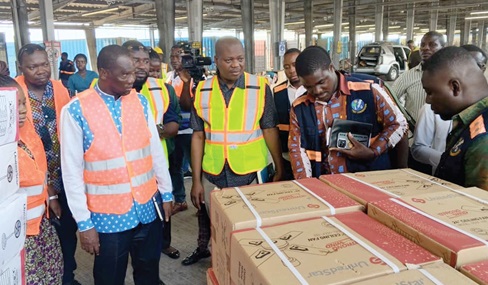
Last Friday, the Board and Management of the Energy Commission (EC) took to the frontlines, conducting a high-stakes inspection at Terminal Three. The message from the Commission’s Board Chairman, Prof. John G. Gatsi, was unequivocal: the era of using Ghana as a ‘dumping ground’ for unsafe energy products is over.
For the average consumer, a cheaper air conditioner or a budget-friendly solar panel might seem like a bargain. However, the reality behind these non-compliant products is often grim. Substandard electrical goods are leading causes of domestic fires, equipment failure, and inflated electricity bills.
Also read: Bunkpurugu MP appeals for probe into seven disappearances in Nakpanduri
Beyond the immediate physical risks, there is a staggering economic toll. Prof. Gatsi revealed during the tour that the influx of these products has led to significant revenue losses for the state. An internal investigation recently exposed a troubling trend: between December 2024 and August 2025—a period marked by a board vacancy during the government transition—importers exploited regulatory loopholes. The findings were stark, showing that solar photovoltaic (PV) systems valued at approximately US$98,000 had entered the country, many of which bypassed mandatory licensing and statutory payments.
Strengthening the shield
To counter this, the Energy Commission is stepping up its game. The intensified surveillance at the ports is part of a broader enforcement roadmap designed to uphold nineteen (19) Legislative Instruments (L.I.s) passed by Parliament to regulate the market.
“When products that do not meet our standards enter the market, lives and property are put at risk,” Prof. Gatsi emphasised.
To mitigate this, the Commission is implementing several key strategies, including increasing personnel by deploying more inspectors to the ports to ensure thorough checks on every shipment of regulated electrical and renewable energy items.
It is also enforcing rigid compliance checks, requiring all imports to meet strict registration and labelling standards, with non-compliant products facing re-export orders or destruction in collaboration with the Environmental Protection Agency (EPA) to prevent environmental harm.
In addition, the Commission is leveraging technology through tools such as the Certified Appliance App and QR codes on labels to help both inspectors and consumers verify the authenticity and efficiency of products in real time.
A call for collaboration
The Energy Commission’s mission is not one it can achieve in isolation. The Board Chairman highlighted the need for seamless collaboration with other state agencies to close the regulatory gaps that importers have previously exploited.
Furthermore, the Commission is engaging the Consumer Electronics & Home Appliances Alliance Ghana (CEHA) and local retailers. While the sale of old stock is being permitted during a transition period—with old and new labels co-existing until July 2026—the push for modern, energy-efficient technology, such as inverter air conditioners, is non-negotiable.
As the Board prepares to convene and review the full findings of its investigation, the focus remains clear: public safety. By tightening the net at the Tema Port and other points of entry, the Energy Commission is doing more than regulating trade—it is safeguarding Ghanaian households.
In a world where energy demand is rising, and the climate is changing, ensuring that every solar panel on a roof and every fridge in a kitchen is safe, efficient, and legally vetted is no longer just a regulatory preference—it is a national necessity. The lights are staying on, and thanks to these stepped-up efforts, they are staying safe too.
By Adnan Adams Mohammed