

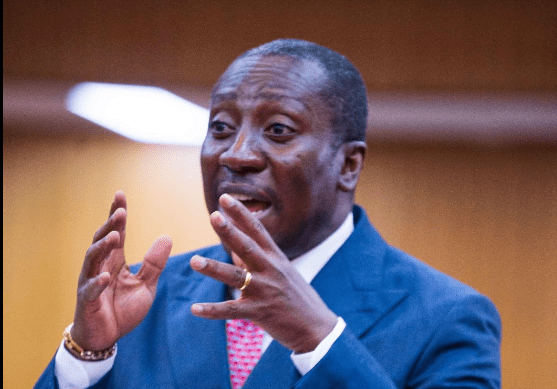

Minority Leader, Alexander Afenyo-Markin, has called for urgent parliamentary investigation into the death of 29-year-old Charles Amissah, who reportedly died after being turned away by several hospitals following a hit-and-run accident in Accra.
He described the incident as a catastrophic failure of the state, insisting that the young man’s death was avoidable.
The Minority leader also appealed to the Ghana Police Service to intensify investigations to apprehend the driver responsible for the crash.
“Let them know that the long arm of justice will not tire until they are brought to account,” he stated.
Also read: Parliament demands accountability on tragic death of hit-and-run victim
Addressing the House on Tuesday, Afenyo-Markin stated that the accident occurred on February 9, 2026, near the Kwame Nkrumah Circle overpass and shortly after an ambulance from the Ghana Ambulance Service arrived within minutes and found him alive, with stable vital signs.
“These were the vital signs of a living man — a man with a fighting chance,” he said.
After initial stabilization, the victim Charles Amissah, he said, was transported to multiple health facilities, including the Korle-Bu Teaching Hospital, but was reportedly denied admission due to lack of beds.
None of the hospitals. he said, conducted proper triage before turning the patient away.
“His life ebbed away in that ambulance while institutions mandated to save him refused to receive him,” he lamented.
After nearly 30 minutes of searching for care, Amissah reportedly went into cardiac arrest and died despite resuscitation efforts.
The Minority Leader cited a 2018 directive by the Ghana Health Service, which prohibits denial of emergency care based on bed availability. The directive mandates immediate stabilization using any available surface if beds are unavailable.
“That principle was abandoned, and a man died as a result,” he said.
Invoking the oversight mandate of the Parliament, Afenyo-Markin urged the Health Committee to investigate the incident by inspecting the emergency units of the affected hospitals, reviewing triage logs and duty rosters, determining whether established protocols were breached, and recommending sanctions or prosecutions where necessary.
“If misconduct is found in these failures, sanctions must follow. If negligence is proven, prosecution must follow,” he stressed.
Afenyo-Markin warned that the incident reflects a broken social contract, lamenting that if a young man can be carried from one public hospital to another until he dies, “then none of us is safe,” he stressed.
He called for urgent reforms to ensure that emergency patients are never again denied life-saving care.