

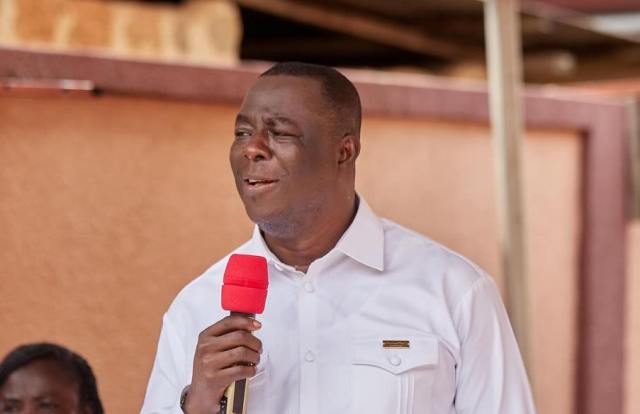

Member of Parliament for Hemang Lower Denkyira, Lawrence Agyinsam, has called for stronger collaboration and policy support to connect entrepreneurs within Ghana’s Micro, Small, and Medium-Sized Enterprises (MSMEs) sector to unlock its full economic potential.
The MP emphasized that MSMEs remain the backbone of Ghana’s economy but continue to face structural challenges, particularly in access to finance, innovation, and digital connectivity.
“This day presents an opportunity to raise awareness of the importance of entrepreneurs in the Ghanaian economy and take actionable steps toward building a sustainable MSME outlook in Ghana,” he said.
Also read: Annoh-Dompreh pushes for strict ecocide legislation to combat environmental destruction
Delivering a statement in the Parliament of Ghana on Monday, he observed that the MSME sector dominates Ghana’s economic landscape and plays a critical role in job creation and national productivity.
He cited data from the Ghana Statistical Service indicating that Ghana has approximately 1.9 million business establishments, of which 1.7 million are micro-sized enterprises.
The regional distribution also highlights the concentration of these businesses across the country.
Ashanti Region: 464,100 MSMEs (27.3%); Greater Accra Region: 379,100 MSMEs (22.3%); and Remaining regions: 857,800 MSMEs (50.4%)
“These businesses typically operate with about one to five employees and mostly lack the motivation to innovate,” he noted.
The MP further stressed that MSMEs account for about 70 percent of Ghana’s Gross Domestic Product, according to data referenced by the United Nations Development Programme.
Beyond economic output, Mr. Agyinsam stressed the sector’s crucial role in employment. He stated that MSMEs account for around 80 percent of Ghana’s labour force, including 85 percent of jobs within the manufacturing sector.
“This clearly highlights their significance in job creation and industrial development,” he told Parliament.
Despite their economic importance, the MP lamented that many entrepreneurs struggle to access capital.
He referred to figures from the International Trade Centre, which estimate that nearly 70 percent of SMEs globally lack access to financing from financial institutions, while another 15 percent remain underfinanced.
“As a result, many SMEs rely on less-than-ideal resources such as internal funds or informal sources like family and friends to sustain their operations,” he said.
He also pointed out that women entrepreneurs face even greater financial constraints, with 45 percent of women-led businesses experiencing financing challenges compared to 27 percent of male-led businesses.
The MP urged the government to accelerate efforts to establish the Women’s Development Bank to support female entrepreneurs.
“The idea of a Women’s Development Bank is commendable and can be used as a policy tool to connect women entrepreneurs,” he stated.
He also proposed strengthening savings groups and cooperatives, particularly in rural communities, to expand access to capital for emerging businesses.
Mr. Agyinsam argued that digital technology must be central to Ghana’s MSME development strategy.
He explained that e-commerce platforms could help small businesses connect to new markets and reduce operational costs, thereby expanding their reach beyond Ghana.
“Digital technologies are pivotal for boosting MSME performance and enabling businesses to sell beyond domestic markets,” he said.
The MP suggested expanding broadband infrastructure and reducing internet costs to improve digital access.
To strengthen the entrepreneurial ecosystem, the lawmaker proposed a national campaign involving the Ghana Enterprises Agency and the National Entrepreneurship and Innovation Programme.
Such initiatives, he said, could include MSME academies, training boot camps, and innovative financing models to help entrepreneurs scale their businesses.
He encouraged entrepreneurs to explore opportunities in Hemang Lower Denkyira, particularly in agriculture and tourism.
The constituency hosts the famous Kakum National Park and has potential for palm oil and rubber production and processing.
“Ghana can become the entrepreneurial hub of Africa when Ghanaian entrepreneurs and businesses are given the right support,” Mr. Agyinsam stressed