

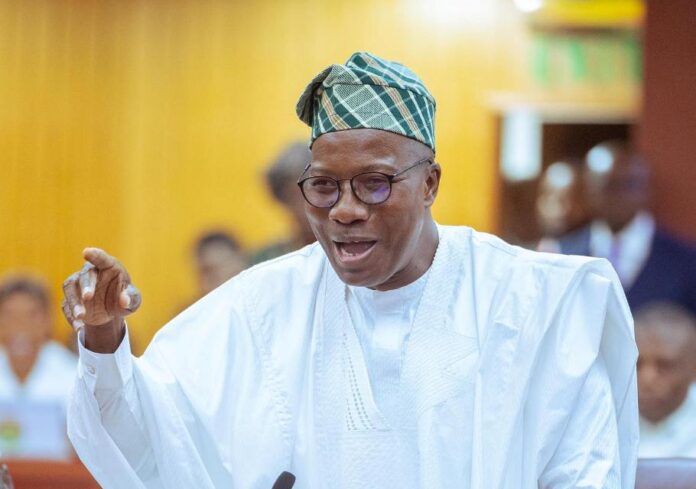

The Majority Leader in Parliament, Mahama Ayariga, has defended the recent State of the Nation Address delivered by John Dramani Mahama, declaring that Ghana is witnessing a “national resurrection” after years of economic hardship.
Closing the debate on the 2026 State of the Nation Address (SONA) debate in Parliament on Wednesday, March 11, Ayariga said the country has moved from a period of survival to one of revival, following decisive economic and governance reforms by the current administration.
According to the Majority Leader, the government inherited a severely distressed economy marked by high inflation, depleted reserves, and massive debt obligations.
Also read: The Front pages: Thursday, 12th March, 2026 (Newspapers)
“Mr. Speaker, we gather here not merely to fulfill a constitutional requirement, but to bear witness to a national resurrection,” Ayariga told Parliament.
He recalled that Ghana’s declaration of a debt default on December 19, 2022, represented a dark moment in the nation’s economic history, leaving the country grappling with soaring inflation and significant fiscal pressures.
However, Ayariga argued that the government’s ‘Resetting Ghana Agenda’ has begun restoring confidence in the economy.
He cited recent macroeconomic indicators, including declining inflation, strengthening financial sector stability, and the Ghana Cedi’s appreciation against major international currencies, as evidence of the recovery.
Inflation, he said, had dropped significantly while fuel prices had also declined, easing pressure on households and businesses.
“When petrol prices drop, it is effectively a pay rise for every taxi driver, truck and Trotro driver and trader,” he said.
Ayariga also credited the administration with abolishing several controversial taxes, including the Electronic Transfer Levy (E-Levy) and the betting tax, saying the move has left billions of cedis in the pockets of ordinary Ghanaians.
He stressed improvements in the financial sector, noting that banking sector assets have grown significantly following reforms aimed at stabilising the industry.
He also emphasised ongoing reforms in the cocoa sector designed to ensure that farmers benefit more directly from rising global cocoa prices.
According to the Majority leader, the reforms will ensure that when international cocoa prices increase, farmers receive a fairer share of the value chain.
On governance, Ayariga defended the government’s push for accountability, insisting that investigations into alleged financial misconduct under previous administrations are necessary to restore public trust.
“The call for accountability is not a pursuit of vengeance; it is a requirement of constitutional hygiene,” he said.
He stressed that ignoring financial irregularities of the past would undermine efforts to build a stronger and more transparent governance system.
Ayariga also dismissed criticism from the Minority over government policies, including suggestions that excavators seized in the fight against illegal mining should be destroyed.
He argued that such equipment could have legitimate uses once confiscated by the state and should not be destroyed unnecessarily.
The Majority Leader touted key government initiatives, including the 24-hour economy policy, expanded agricultural support under the Feed Ghana programme, and investments in education and healthcare.
These programmes, he said, such as the No Fee Stress initiative for first-year tertiary students and the Mahama Cares health fund for chronic diseases, are designed to reduce inequality and improve access to essential services.
“As we take stock of the state of our nation, the dawn is no longer breaking. The morning is here, and the resurrection is complete — a morning of work, justice, and hope,” Ayariga stressed