


A member of the ECOWAS Parliament has called for an urgent overhaul of educational curricula across West Africa, warning that the current system is producing graduates who lack the practical skills required by the job market.
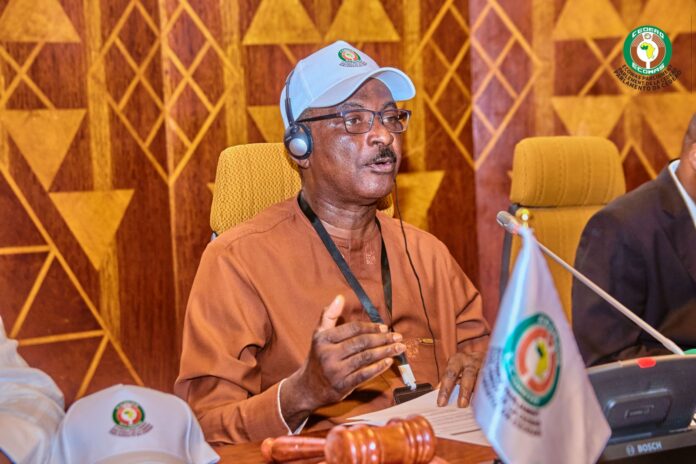
George Kweku Ricketts-Hagan, Chairman of the Parliament’s Committee on Education, Science and Culture, made the call on the sidelines of a joint delocalised meeting currently taking place in Lomé, Togo.
The meeting, which entered its third day on Thursday, March 12, 2026, is being held under the theme “Strengthening Curriculum Alignment with Socio-Economic Needs of the ECOWAS Region.”
Also read: US refuelling plane crashes in Iraq as Trump eases Russia oil sanctions
Speaking to journalists, Ricketts-Hagan expressed concern that universities and tertiary institutions across the region are focusing excessively on theoretical learning rather than practical, industry-driven skills.
According to him, the growing disconnect between academic training and labour market demands has contributed significantly to rising graduate unemployment in the sub-region.
“We are not producing the workforce that industries need,” he stated.
“We need to redesign our curricula so that when students go to universities or tertiary institutions, they study courses that are relevant to the job market within the African context.”
He noted that while the challenge affects the broader African continent, it is particularly pressing within the Economic Community of West African States (ECOWAS).
Ricketts-Hagan said aligning education with socio-economic realities would improve workplace productivity and help strengthen the economies of member states.
The ECOWAS legislator also acknowledged that the region often struggles to implement well-crafted policies and recommendations.
“Implementation is our problem,” he admitted. “We make very good laws and policies, but if they are not implemented, they do not do you any good.”
He explained that several presentations at the meeting highlighted the need to reduce excessive theoretical instruction and introduce more practical training into educational systems across West Africa.
According to him, the focus must now shift toward ensuring that education directly benefits the workplace and equips students with real-world problem-solving skills.
Ricketts-Hagan also emphasized the need to strengthen entrepreneurship education across the region.
He argued that students should be trained not only to seek employment but also to become job creators.
“You learn to create your own business. You are not learning to become an employee of someone, but rather to become an employer yourself creating a business where other students can work,” he said.
He believes entrepreneurship training could play a crucial role in addressing youth unemployment while promoting innovation and economic growth across ECOWAS countries.
The ECOWAS lawmaker further stressed that vocational and entrepreneurial training should begin long before students reach university.
He said many developed countries introduce children to science, technology, and innovation from an early stage, enabling them to develop skills and interests that shape their future careers.
“When you go to Japan, China, or the United States, their children start very early,” he said.
“You see children being introduced to gadgets and technology at a very young age. They are exposed to the possibilities of what they can achieve.”
Ricketts-Hagan shared a personal experience from his university days studying Mathematics and Computer Science, noting that some students had never seen a computer before enrolling in tertiary education.
He therefore called for the early introduction of digital literacy, entrepreneurship, and technical education in secondary schools and even at lower levels.
“You are not too young to learn. When you introduce these concepts early, students grow with them and it becomes part of their nature,” he added.
By Kwaku Sakyi-Danso