

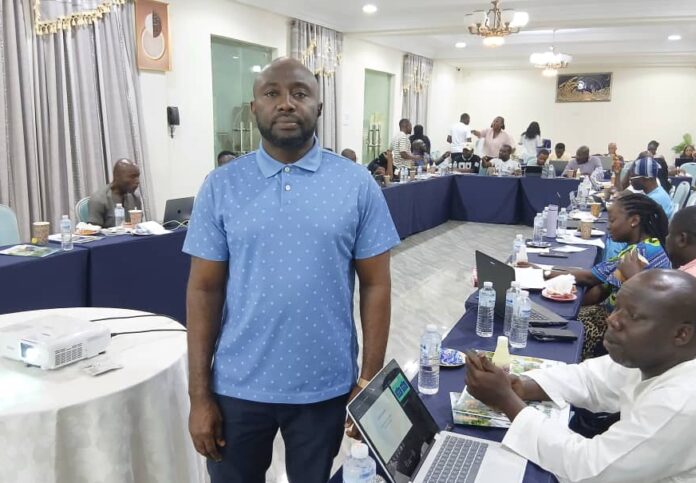

The Director of Media Relations at the Parliament, David Sebastian Damoah, has charged parliamentary reporters to refine their technical expertise in public financial management to bolster national transparency and executive accountability.
According to him, the efficacy of the legislature is inextricably linked to the quality of its communication with the public.
He argued that the complex deliberations held within the chamber only gain social relevance when they are interpreted accurately for the Ghanaian public through the media.
Addressing members of the Parliamentary Press Corps (PPC) during a specialized training seminar in Koforidua, Damoah underscored that the duty of a journalist transcends mere stenography.
Also read: Why Ghana’s growth is rising but jobs are not – Finance Ministry researcher explains
“It is a fundamental pillar of democratic accountability that requires a sophisticated grasp of how state resources are mobilized and spent,” he said.
The core of Mr. Damoah’s message centered on the intricate nature of budget oversight. He reminded the press corps that while Parliament is the constitutional body tasked with scrutinizing expenditure and approving national budgets, these processes are often shrouded in technical jargon that can alienate the average citizen.
He noted that the ability of the press to demystify these financial frameworks is what ultimately allows citizens to hold the government to account for its fiscal stewardship.
The training, sponsored by the World Bank and the Foreign, Commonwealth & Development Office (FCDO) of the United Kingdom government under the auspices of the Ghana Parliament, was structured to bridge the existing gap between parliamentary proceedings and public comprehension.
The topics included comprehensive modules on Ghana’s Public Financial Management (PFM) framework and practical techniques for analyzing national budgets. Participants also engaged in sessions regarding the auditing lifecycle, specifically focusing on the collaborative role of the Ghana Audit Service in ensuring that public funds are utilized for their intended purposes without leakage.
A significant portion of the discourse was dedicated to the ethics of financial reporting. Damoah urged journalists to maintain a balance between speed and accuracy, emphasizing that responsible reporting prevents the spread of misinformation regarding the nation’s economic health. He encouraged the reporters to immerse themselves in the insights provided by the workshop to ensure their future output remains balanced and insightful.
He expressed gratitude to development partners, including the World Bank and the FCDO for their role in facilitating the capacity-building program.
He maintained that a well-informed citizenry is the ultimate safeguard of a robust democracy, expressing his confidence that this intervention would lead to a more transparent governance system and a higher standard of journalism within the corridors of power.