

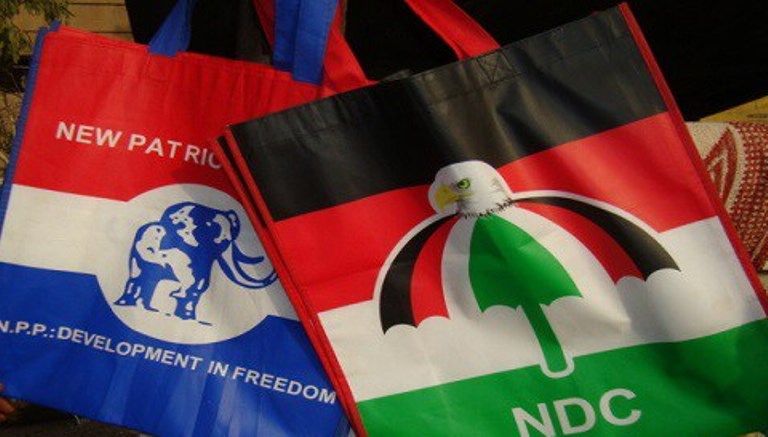

A new tracking poll by Global InfoAnalytics shows a significant shift in Ghana’s political landscape, with support for the opposition New Patriotic Party (NPP) declining sharply while the ruling National Democratic Congress (NDC) gains momentum.
Pollster Mussa Dankwah disclosed that the findings are based on ongoing face-to-face tracking surveys conducted in March 2026.
“Ongoing face-to-face tracking poll for March 2026 shows NPP support continues to decline in party affiliations,” he said in a Facebook post.
According to Mr. Dankwah, the NPP previously held a slight advantage in party identification ahead of the 2024 general elections.
Also read: Mahama launches first farmer services centre to boost food security
“Before the 2024 elections, NPP support was 37% and NDC, 33%,” he noted.
However, the latest figures indicate a reversal of fortunes.
“Currently, only 25% of voters openly associate themselves with NPP compared to 46% for the NDC,” he revealed.
The poll further highlights a more pronounced shift in key battleground areas, often critical in determining election outcomes.
“The situation is even worse in the swing regions… where only 22% say they are NPP compared to 58% for the NDC,” Mr. Dankwah stated.
The regions identified include Greater Accra, Central, and Western, areas traditionally seen as decisive in national elections.
Mr. Dankwah attributed the changing political dynamics to recent developments within the opposition party.
“In the aftermath of NPP primaries, cocoa price brouhaha, etc., the political environment still appears hostile for the opposition party,” he explained.
Analysts say such factors may be influencing public perception and voter alignment.
The findings underscore growing challenges for the New Patriotic Party as it seeks to rebuild support following the 2024 elections.
At the same time, the National Democratic Congress appears to be consolidating its base and expanding its appeal, particularly in swing regions.
With the political landscape shifting, the coming months are expected to test the strategies of both major parties as they position themselves for future electoral contests.