

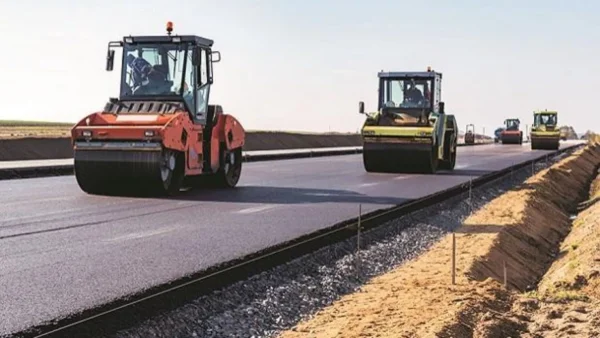

The Fourth Estate claims that data obtained through Right to Information requests indicate that the Ministry of Roads and Highways awarded 107 road contracts between 2025 and 2026 without competitive tendering.
According to the media outlet, a total of 81 contracts valued at over GH¢73 billion were awarded through sole-sourcing, while 26 contracts, worth about GH¢8 billion, were awarded through selective (restrictive) tendering.
An article published on the Fourth Estate website argues this means more than 90% of the total contract value under the Big Push initiative has been allocated without open competitive bidding.
Also read: The Front pages: Tuesday, 24th March, 2026 (Newspapers)
“Despite these figures, Majority Leader Mahama Ayariga told Parliament on March 11, 2026, that ‘the era of the sole-sourced contract is dead,’ it pointed out.
Meanwhile, Roads and Highways Minister Kwame Governs Agbodza defended the procurement approach, noting that most contracts were awarded through restricted tendering to ensure timely execution.
“Contracts were procured predominantly through restrictive tendering to ensure rapid project commencement,” he explained, adding that extensive engineering and feasibility studies were conducted before approvals.
However, official data from the Ministry and the Ghana Highway Authority contradicts this claim, showing that approximately 76% of the contracts were in fact sole-sourced.
Below is the full article by The Fourth Estate
Sole-Sourcing dominates ‘Big Push’ road contracts despite Mahama’s transparency pledge
One year after John Dramani Mahama pledged to end the abuse of sole-source procurement, new data indicate that the government’s flagship “Big Push” infrastructure programme is heavily reliant on the very practice he vowed to curb.
During his first State of the Nation Address (SONA) on February 27, 2025, President Mahama assured Ghanaians that his administration would prioritise competitive bidding in the award of public contracts, particularly in addressing the country’s worsening road infrastructure. He reiterated that “single-source procurement must be the rare exception rather than the norm,” a position he repeated at the National Economic Dialogue in Accra just days later.
However, findings by The Fourth Estate reveal a stark contrast between policy and practice.
Over 100 Contracts, Zero Competitive Bidding
According to data obtained through Right to Information (RTI) requests, the Ministry of Roads and Highways awarded 107 road contracts between September 2025 and February 2026. None of these contracts went through competitive tendering.
Out of the total:
81 contracts, valued at over GHS73 billion, were awarded through sole-sourcing
26 contracts, worth about GHS8 billion, were awarded through selective (restrictive) tendering
This means more than 90% of the total contract value under the Big Push initiative has been allocated without open competitive bidding.
Contradictions from Government Officials
Despite these figures, Majority Leader Mahama Ayariga told Parliament on March 11, 2026, that “the era of the sole-sourced contract is dead.”
Meanwhile, Roads and Highways Minister Kwame Governs Agbodza defended the procurement approach, noting that most contracts were awarded through restricted tendering to ensure timely execution.
“Contracts were procured predominantly through restrictive tendering to ensure rapid project commencement,” he explained, adding that extensive engineering and feasibility studies were conducted before approvals.
However, official data from the Ministry and the Ghana Highway Authority contradicts this claim, showing that approximately 76% of the contracts were in fact sole-sourced.
Legal Framework Raises Questions
Ghana’s Public Procurement Act (Act 663) permits sole-sourcing only under exceptional circumstances—such as emergencies or when a single supplier has exclusive rights. Critics argue that the scale of sole-sourcing under the Big Push programme raises serious concerns about compliance with the law.
Civil Society Slams Government
Civil society organisations and policy analysts have strongly criticised the government’s approach, warning that it undermines transparency and value for money.
Mary Addah, Executive Director of Transparency International Ghana, described the situation as troubling.
“It’s sad that people who stand on the pulpit to say one thing carry on and do other things,” she said, citing weak enforcement and lack of accountability.
Similarly, Benjamin Boakye of the Africa Centre for Energy Policy questioned the government’s consistency, suggesting that past criticisms of sole-sourcing may have been politically motivated.
Franklin Cudjoe warned that procurement abuses remain a major source of financial leakage.
“With these dizzying numbers, we are lost,” he remarked.
Anti-corruption advocate Vitus Azeem also expressed disappointment, noting that the trend contradicts the President’s own legislative promises.
Past Criticism Returns to Haunt NDC
While in opposition, several leading figures of the governing National Democratic Congress (NDC) were vocal critics of sole-sourcing.
Foreign Affairs Minister Samuel Okudzeto Ablakwa had previously described similar practices under the previous administration as “deplorable.”
Likewise, Sammy Gyamfi repeatedly argued that inflated sole-sourced contracts were costing the country billions.
Growing Concerns Over Policy Credibility
With the scale of sole-sourcing under the Big Push programme now exposed, analysts say the Mahama administration risks undermining public trust and its own reform agenda.
The emerging pattern suggests that, despite strong rhetoric and repeated commitments, the government may be replicating procurement practices it once fiercely criticised.