


Parliament has backed the recent United Nations (UN) resolution declaring the trans-Atlantic trafficking and enslavement of Africans a crime against humanity, with a strong call for global justice and reparations.
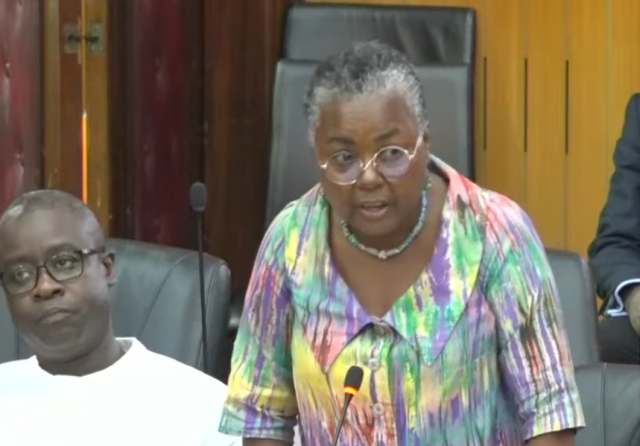
The statement was delivered on the floor of the House on Friday by the Minister for Fisheries and Aquaculture and Member of Parliament for Shama, Emelia Arthur.
Addressing the House, she described the resolution as a defining moment in global moral history—one that demands not only acknowledgment of past atrocities but also decisive action toward justice and repair.
She commended President John Dramani Mahama for his powerful and uncompromising address at the United Nations, noting that his remarks helped reclaim historical truth and reshape global understanding of the trans-Atlantic slave trade.
Also read: ‘No Kings’ protests erupt across US as demonstrators fiercely rally against President Trump
According to her, the resolution challenges dehumanising narratives and restores dignity to millions of Africans who were subjected to a brutal and systematic system of exploitation.
“There is a profound difference between calling a human being a slave and recognising that human beings were enslaved,” she stated, stressing the importance of language in shaping historical consciousness.
She described the trans-Atlantic slave trade as a highly organised and profitable economic system that commodified human life, enriched nations, and left lasting scars on Africa and its diaspora.
The Minister argued that the effects of slavery did not end with abolition but continue to manifest in structural inequalities and global disparities, reinforcing the need for reparations.
“Reparations are not a matter of sentiment; they are a matter of justice,” she emphasised, adding that the call is not about blaming present generations but addressing the enduring consequences of historical injustices.
The resolution, she noted, also serves as a safeguard against historical revisionism, warning that attempts to sanitise or distort the past risk erasing the suffering and resistance of enslaved Africans.
Stressing Africa’s rich pre-slavery history, she pointed to the continent’s advanced civilisations and contributions to global progress, urging a balanced narrative that reflects both resilience and achievement.
She reaffirmed Ghana’s longstanding leadership in the Pan-African struggle for independence, dignity, and justice, calling on the country to once again take the lead in shaping the global discourse on reparations and historical accountability.
“This is not just a victory for Ghana, but for Africa, the Caribbean, and the global diaspora,” she said, urging sustained engagement and concrete action following the UN resolution.
The Minister called for unity and resolve in honouring the memory of those affected by slavery and building a future grounded in justice and truth.
Contributing to the statement, Second Minority Whip, Ahmed Shuaib, acknowledged Ghana’s contributions to the global reparations discourse but stressed that the push did not begin with the current administration.
He credited former President Nana Addo Dankwa Akufo-Addo for initiating the conversation at the United Nations, particularly during his address in September 2023, where he called for justice, compensation, and formal apologies from countries involved in the transatlantic slave trade.
According to him, initiatives such as the “Year of Return,” spearheaded through Ghana’s tourism sector, also played a crucial role in reconnecting the African diaspora to their roots and amplifying the reparations agenda.
While acknowledging the leadership of President John Dramani Mahama in advancing the resolution, Mr. Shuaib argued that the deeper issues linked to slavery—such as racism, economic inequality, and global injustice—remain unresolved.
He described as an excessive celebration of the UN resolution, arguing that real progress lies in addressing domestic economic structures rather than relying on external recognition.