

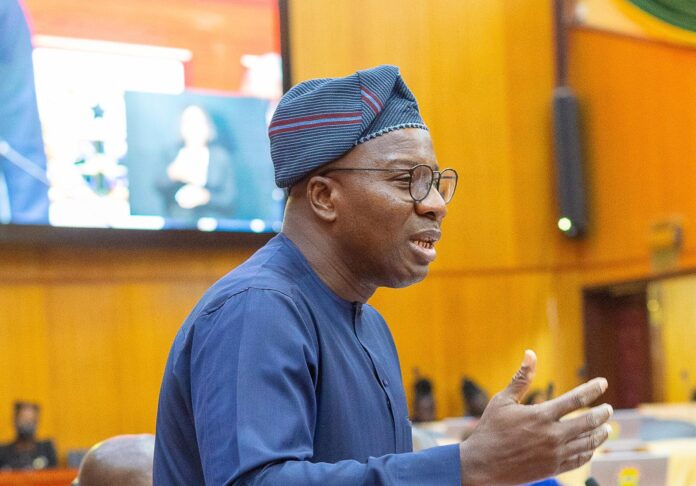

Majority Leader in Parliament, Mahama Ayariga, has pushed back against claims made by the Minority, insisting that no attempt has ever been made to silence dissent in Parliament.
Mr. Ayariga criticised the Minority Leader, Alexander Kwamena Afenyo-Markin, for what he described as an overly political address rather than a routine closing statement.
Delivering his closing remarks on Friday as Parliament adjourned sine die, Mr. Ayariga dismissed suggestions that the Minority was being suppressed, arguing instead that the caucus enjoys ample opportunity to express its views.
“Indeed, the records will show that the Minority speaks beyond what is necessary,” he stated.
Also read: MTN eyes digital banking licence in Ghana — Mupita
The Majority Leader also questioned the Minority Leader’s political confidence ahead of the 2028 general elections, pointing to what he described as a decline in parliamentary strength.
“When he became a leader, he was handed 137 MPs. He went into an election and met 87 MPs, and he’s so confident that 2028 is for them,” he remarked.
Speaking on the issue of alleged irregularities involving the Ghana Gold Board (GoldBod), Mr. Ayariga condemned the Minority leader for continuing to raise concerns after Parliament had rejected a motion calling for an investigation into the matter.
“I think that is most unfair,” he said.
He also accused the Minority Leader of misrepresenting remarks made by President John Dramani Mahama on illegal mining, popularly known as galamsey.
According to him, the President had not stated that the situation was “getting out of hand,” as suggested by the Minority.
“That’s not true. The President was asked whether he knew that some members of his party were also involved in galamsey. He did not say that galamsey is getting out of hand,” Mr. Ayariga clarified.
The Majority Leader also rejected claims that the government has failed to distinguish itself from the previous administration, insisting that current policies are delivering tangible benefits to the Ghanaian people.
He cited the rejection of a motion seeking to investigate a transaction cost of $214 million, explaining that while such costs may be high, they are tied to initiatives that benefit the broader economy.
“That is the difference,” he emphasised.