

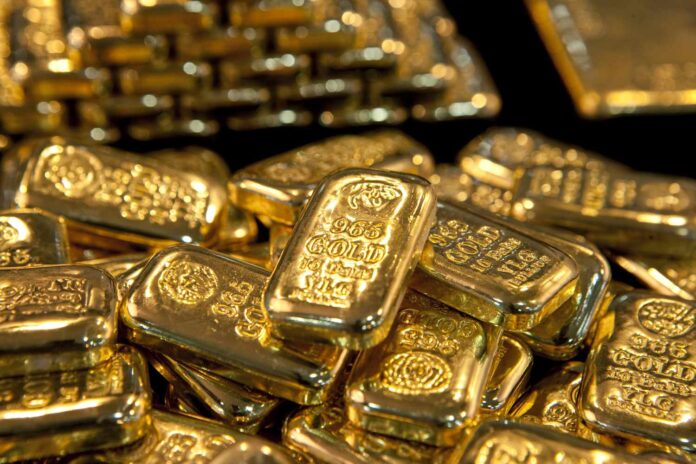

Gold prices surged on April 8 following a two-week ceasefire agreement between the United States and Iran, a development that triggered a sharp drop in global oil prices and renewed momentum in the bullion market.
Spot gold jumped more than 3% to trade around US$4,854.10 per ounce by midday, while gold futures climbed about 2%. Despite the rebound, the precious metal remains down roughly 7% over the past month and about 13% below its January 28 record high of US$5,589.
The ceasefire also weighed on the US dollar, with the Bloomberg Dollar Spot Index declining by 0.7%. Against the Singapore dollar, the greenback weakened by 0.5% to S$1.2750 after hitting an intraday low of S$1.2741—its weakest level since March 24.
Also read: The Front pages: Wednesday, 8th April, 2026 (Newspapers)
The decline in oil prices is easing global inflationary pressures, reinforcing expectations that central banks—particularly the US Federal Reserve—may hold off on further interest rate hikes.
Higher interest rates typically dampen demand for gold, as investors shift toward yield-bearing assets such as bonds. Conversely, expectations of lower rates weaken the US dollar, making gold cheaper for investors using other currencies and boosting demand.
OCBC foreign exchange strategist Christopher Wong noted that the latest rally reflects a “partial unwinding of geopolitical risk premium” that had previously weighed on bullion prices.
He added that gold’s next move will largely depend on whether the ceasefire holds and if declining oil prices create room for interest rate cuts by the Federal Reserve.
However, Alex Ho of CMC Singapore urged caution, describing the rally as a “classic knee-jerk reaction.”
According to him, while structural supports such as central bank buying, a weaker dollar, and persistent inflation remain intact, the ceasefire removes a key short-term driver—the energy shock premium.
“If the ceasefire holds and oil continues to fall, the safe-haven demand for gold could fade quickly,” he said, adding that future price movements will likely hinge more on US treasury yields and the dollar index than on geopolitical developments.
Gold has enjoyed a strong rally in recent years, surging 60% in 2025 on the back of geopolitical tensions, expectations of lower interest rates, and sustained central bank purchases.
One of the key drivers remains the People’s Bank of China, which continues to accumulate gold reserves. In March alone, the bank added 160,000 troy ounces, extending its buying streak to 17 consecutive months—the longest in over a year.
Although the Iran conflict earlier in 2026 erased much of gold’s gains this year, analysts say continued central bank demand and macroeconomic conditions could still provide long-term support for the precious metal.