

- Opening Position – Balanced & Principle-Based
We in the NPP are not against local participation in Ghana’s mining industry. In fact, it is essential for long-term national development, value retention, and building Ghanaian champions.
However, local participation must be done right—in a way that creates value for Ghana, not one that inadvertently leads to value erosion or capital flight.
- The Core Concern – Process and Proportionality
Damang is a strategic national asset that has reverted to the State as a result of the expiration of Goldfields’ license.
Also read: Interior Ministry clears rent allowance arrears for security services
The key question is: Has the process used ensured Ghana captures the full value of this asset?
We understand that the tender process required bidders to demonstrate the ability to raise approximately $500 million, and the process itself was completed within a relatively short timeframe (7 days). My Natural Resources students will remember the judgment by Ackah Boafo J, as he then was, in the Exton Cubic case.
So when you step back and look at the fundamentals:
– Damang is estimated to host 3.5 million ounces of gold
– At a conservative margin of $2,000 per ounce,
– This implies a potential value in the region of $7 billion
The concern, therefore, is one of proportionality:
➡ How do we justify allocating an asset of that magnitude based primarily on proof of funding at a fraction of its underlying value?
- The Missing Step – Independent Valuation
In transactions of this scale globally, there is always:
– A robust, independent technical and financial valuation
– A clear understanding of:
– Remaining reserves and resources
– Required capital (capex) to sustain and grow production
– Long-term cashflow potential
This valuation then forms the basis for:
– Equity structuring
– Negotiation of ownership and value sharing
Without this step, we risk undervaluing a national asset. Imagine if E&P had gone to Goldfields to buy the mine, how much would they have valued and sold it to E&P?
- Equity & National Interest – Where Ghana Should Stand
Ghana already has a 10% free carried interest in mining assets.
But for an asset of this scale and significance, one would expect:
– A material equity stake for the State—potentially in the range of 30–40% or more, depending on valuation and risk-sharing
– Active participation through institutions such as MIIF (Minerals Income Investment Fund)
– How much stake is our minerals investment fund taking in the whole transaction?
The investment ensures that Ghana benefits not just from royalties and taxes, but also from direct value creation and upside participation.
- How This Should Ideally Work – Global Best Practice
Under normal circumstances:
– A company interested in acquiring Damang would engage the current owner (e.g., Gold Fields) in an arm’s length transaction
– Both parties would conduct independent valuations
– The investment required (capex) would be factored into pricing
– A mutually agreed value would emerge through commercial negotiation
This is how value is properly discovered and protected.
- The Key Risk – Perception and Precedent
When a process appears:
– Too rapid
– Not anchored on transparent valuation
– Or disproportionate to the underlying asset value
It creates three risks:
- Perception risk – undermining public trust
- Precedent risk – setting a model that could weaken Ghana’s position in future asset allocations
- Political risk- whatever is won through political patronage can be lost through political intervention.
7. A Better Use of the Tender Model
A tender process is not inherently wrong—but its application matters.
It is most appropriate where:
– Government retains ownership of the asset, and
– Invites a company to:
– Operate the mine for a fee, or
– Partner through a clearly structured equity arrangement
In such cases, Ghana remains firmly in control of the asset while leveraging private sector expertise and capital.
- Closing – The Strategic Imperative
This conversation is not about opposing local participation.
It is about ensuring Ghana wins fully and fairly
We must move from:
➡ “Who gets the asset?”
To: ➡ “How does Ghana maximise value from the asset?”
Because ultimately, these resources are national assets held in trust for current and future generations.
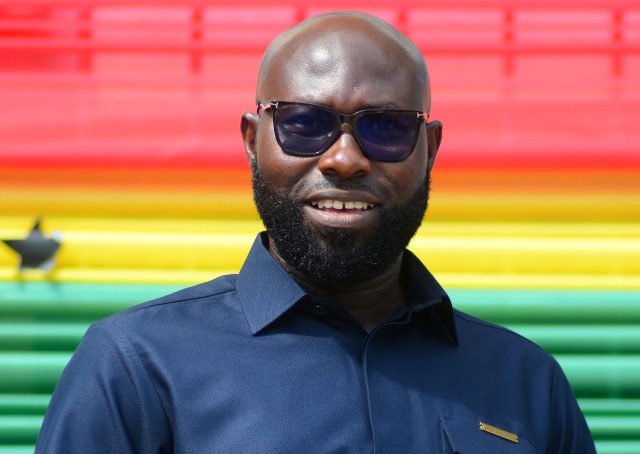
By John Darko, MP & Natural Resources Law Lecturer-GIMPA