

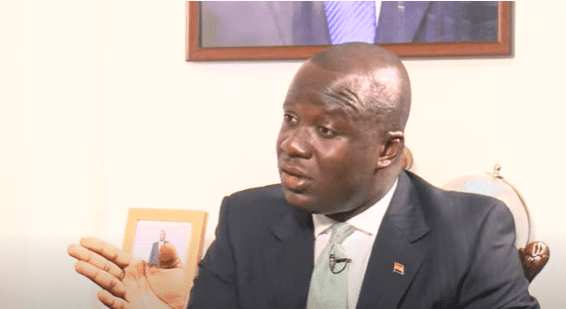

The Ranking Member on Parliament’s Foreign Affairs Committee and Member of Parliament for Damongo, Samuel Abu Jinapor, has questioned the government’s claim of running a lean government, arguing that rising expenditure on the machinery of government paints a different picture.
In a statement, Mr Jinapor said the size of government should not be measured solely by the number of ministers and deputy ministers appointed, but by the total cost of maintaining political appointees and administrative structures funded by taxpayers.
According to him, a report submitted to Parliament by President John Dramani Mahama under Section 11 of the Presidential Office Act, 1993 (Act 463), showed that the Office of the President had a staff strength of 808 as of December 31, 2025, down from 921 in 2023.
Also read: The Front pages: Wednesday, 17th June, 2026 (Newspapers)
While the reduction in staff numbers may appear to indicate a leaner administration, the Damongo MP argued that the figures fail to capture the full extent of government appointments.
He noted that the report excludes political appointees, presidential advisers, special assistants, aides, coordinators, and directors serving across Ministries, Departments, and Agencies (MDAs), as well as political appointments in Ghana’s diplomatic missions abroad.
Mr Jinapor cited the appointment of 18 Deputy Ambassadors under the current administration, compared to six under the previous government.
He estimated the annual cost of maintaining the 18 deputy ambassadorial positions at between US$2.7 million and US$3.1 million, amounting to approximately US$11 million to US$12 million over a four-year term.
“These appointments all carry financial implications and form part of the broader machinery of government that taxpayers ultimately fund,” he stated.
The former Lands and Natural Resources Minister further pointed to significant changes in compensation allocations under the Office of Government Machinery.
According to him, compensation expenditure increased from approximately GH¢326 million in 2024 to about GH¢2.7 billion in the initial 2025 budget before being revised to around GH¢362 million during the Appropriation process.
He added that the allocation for 2026 now stands at approximately GH¢540 million, which he said is nearly double what the previous administration spent.
Mr Jinapor questioned how a government that pledged to reduce waste and operate a lean administration could employ fewer people while recording a significantly higher compensation bill.
“How does a government employ fewer people while spending more?” he asked.
He argued that governments can reduce the number of ministers while simultaneously expanding the machinery of government through staffers, advisers, and other political appointees whose remuneration is comparable to that of ministers and deputy ministers.
According to him, any meaningful assessment of the size of government must go beyond headcount and focus on the actual cost of sustaining the machinery of government.
He called for greater transparency, accountability, and prudent management of public funds, insisting that Ghanaians deserve clear answers regarding the true cost of running the government.