

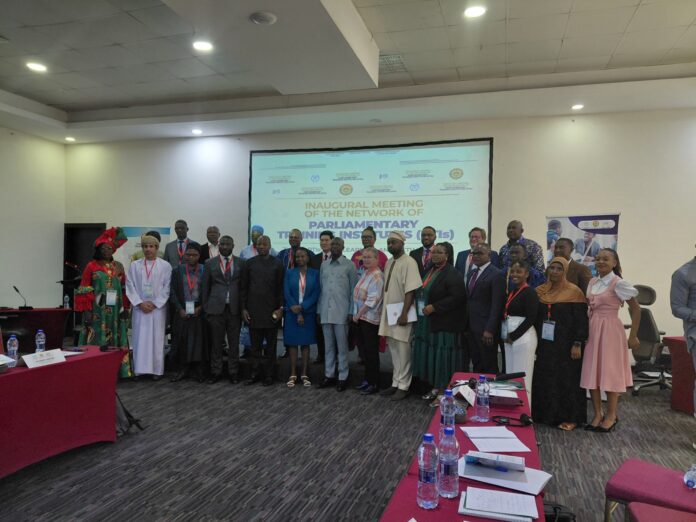

Parliament, through the Parliamentary Training Institute (PTI), in collaboration with the Inter-Parliamentary Union (IPU), has opened the inaugural meeting of the Network of Parliamentary Training Institutes (PTIs) in Accra.
The two-day conference, organised in partnership with the Centre for Parliamentary Studies and Training (CPST) of the Parliament of Kenya, aims to bring together parliamentary training institutions worldwide to foster cooperation, peer learning, and knowledge exchange.
Held under the theme “PTIs: Peer Learning and Networking,” the event runs from March 23 to 24, 2026, and has attracted parliamentary leadership, Members of Parliament, and management of the Parliamentary Service.
Also read: Big Push or big questions? Sole-sourcing dominates road contracts – The Fourth Estate claims
Bernard Ahiafor, First Deputy Speaker of Parliament, delivered remarks on behalf of the Speaker, Alban Sumana Kingsford Bagbin, underscoring the importance of continuous training in enhancing legislative effectiveness.
“The effectiveness of any parliament is closely tied to the quality of its members and the robustness of its support system,” he stated.
He stressed that training must evolve beyond occasional programmes into a strategic institutional priority, driven by collaboration and shared learning.
Mr. Ahiafor noted that Ghana’s Parliamentary Training Institute conducted 36 training programmes in the past year, benefiting 2,792 participants, including MPs and staff.
Professor Nyokabi Kamau, Executive Director of CPST, described the conference as a major step toward strengthening parliamentary training networks across Africa and beyond.
She highlighted the importance of sharing best practices and building capacity within legislative institutions to improve governance outcomes.
Speaking on behalf of the Minority Leader, Vincent Ekow Assafuah, MP for Old Tafo, emphasised the need for innovation, technology adoption, and a shift in mindset where training becomes integral to parliamentary work.
He outlined investment, relevance, and ownership as key pillars for sustaining effective parliamentary training systems.
Majority Leader Mahama Ayariga, in his address, described the initiative as a ‘game-changer’ for parliamentary democracy.
He noted that the network would not only enhance capacity within parliaments but also extend its impact to the broader democratic ecosystem, including the media, civil society, and citizens.
The inaugural meeting has brought together 30 parliamentary training institutions from across the globe to promote collaboration, address common challenges, and strengthen institutional capacity.
Participants are expected to develop frameworks for sustained cooperation, resource sharing, and innovation in parliamentary training.
GNA