


Ghana’s non-traditional export (NTE) sector recorded $5.0069 billion in earnings in 2025, representing a 30.7 per cent increase over the $3.83 billion achieved in 2024, according to the Ghana Export Promotion Authority (GEPA).
The performance reflects strong growth in value-added exports and signals the early impact of the Accelerated Export Development Programme, the Authority said at the launch of its 2025 NTE Statistics Report in Accra on Friday.
Non-traditional exports refer to all export products other than the country’s traditional exports of cocoa, gold, crude oil, and timber, and are seen as critical to diversifying Ghana’s economy and boosting foreign exchange earnings.
Also read: Tema Crash: ‘Aircraft attempted emergency landing but made no ATC distress call’
The report showed that processed and semi-processed products continued to dominate the sector, contributing $3.09 billion, a 52.78 per cent increase over 2024, and accounting for 83.47 per cent of total NTE earnings.
Cocoa derivatives — including cocoa paste, butter, and powder — remained the single largest contributor, making up 33.18 per cent of the export basket.
Agricultural exports also grew significantly by 37.82 per cent to $710.3 million, driven by cashew nuts, shea nuts, and bananas, with yam exports recording a sharp 559 per cent increase.
In terms of markets, Europe remained Ghana’s largest destination for non-traditional exports, generating $2.29 billion, representing a 55.34 per cent increase.
Africa accounted for 30.36 per cent of exports, largely driven by intra-ECOWAS trade, while North America recorded the highest growth rate at 82.40 per cent, and Asia grew by 14 per cent.
The Netherlands emerged as Ghana’s leading export destination, followed by Burkina Faso, the United States, the United Kingdom, Togo, France, Italy, India, Côte d’Ivoire, and Vietnam.
Mr Francis Kojo Kwarteng Arthur, Chief Executive Officer of GEPA, said the sector’s performance demonstrated “a more competitive export base and expanding global reach.”
“This level of performance, achieved with only 10 per cent of the import levy allocation, highlights the efficiency of our export promotion efforts and the strong return on investment,” he said.
He appealed for an increase in GEPA’s share of the import levy from 10 per cent to 20 per cent to accelerate progress towards the Authority’s $10 billion export target by 2030.
“If 10 per cent can generate over $5 billion in export earnings, then 20 per cent will yield even greater results in foreign exchange generation, job creation and industrial transformation,” he added.
Mr Arthur also highlighted key interventions undertaken by GEPA in 2025, including support for small and medium enterprises (SMEs) to participate in international trade fairs, facilitation of direct export shipments, and capacity-building programmes for over 2,000 exporters.
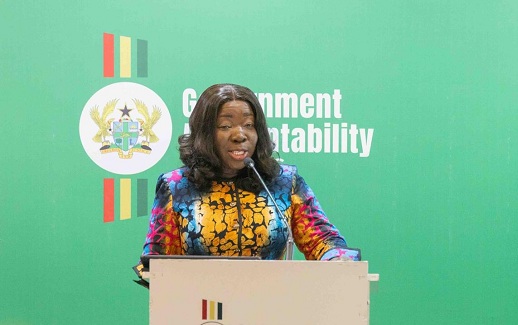
Mrs Elizabeth Ofosu-Adjare, Minister of Trade, Agribusiness and Industry, called for tailored financing solutions to support SMEs, stressing the need for “patient and well-structured capital designed specifically to meet the unique needs of small businesses in the export sector.”
In a statement read on his behalf, Dr Johnson Asiama, Governor of the Bank of Ghana, said the NTE sector contributed about 16 per cent of Ghana’s total export earnings of $31.2 billion in 2025.
He noted that the sector played a crucial role in strengthening the country’s foreign exchange reserves, stabilising the cedi and anchoring inflation.
“The NTE sector is therefore significant to Ghana’s macroeconomic stability and highlights the strong link between trade development and monetary policy,” he said.
Dr Asiama called for deliberate policy interventions, including affordable financing, tax incentives, and improved access to international markets, to sustain the sector’s growth.
The launch was accompanied by an exhibition of a wide range of Ghanaian non-traditional export products.
GNA