

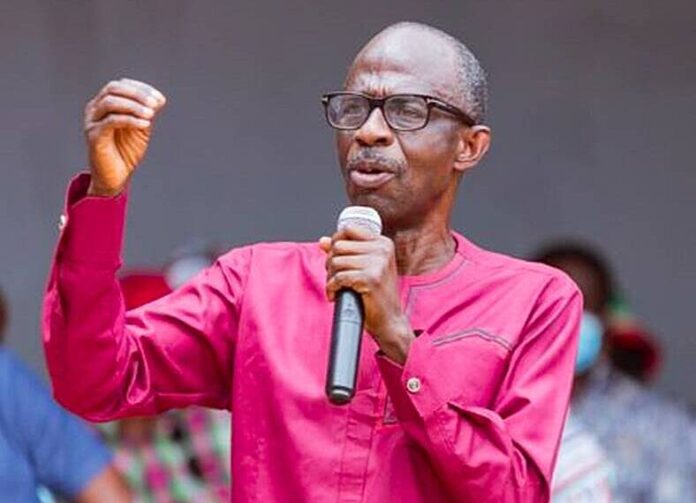

The Board Chairman of the Ghana Ports and Harbours Authority, Johnson Asiedu Nketiah, has called for the swift completion of the Boankra Integrated Logistics Terminal.
The project, he said, is pivotal to Ghana’s economic transformation and long-term competitiveness.
Speaking during a working visit to the project site at Boankra in the Ejisu Constituency, Mr. Asiedu Nketiah stressed that Ghana must rethink its economic growth model and embrace modern logistics infrastructure to remain relevant in an increasingly competitive global trade environment.
Also read: Trump says he ‘wasn’t worried’ during Washington press dinner shooting
“This is not just another infrastructure project,” he noted. “It represents a strategic shift in how Ghana manages trade, reduces costs, and improves efficiency across its supply chain.”
The visit formed part of a joint inspection exercise involving officials from the GPHA and the Ghana Shippers Authority to assess progress and address implementation challenges. The delegation toured critical components of the facility, including sections of the container terminal and the container freight station, which are expected to serve as the operational backbone of the inland port.
While expressing satisfaction with the quality and pace of work, Mr. Asiedu Nketiah emphasized that the true value of the project will only be realized upon its completion. He underscored the port’s potential to decongest Ghana’s seaports and extend cargo handling services to businesses in the middle and northern belts of the country.
The Boankra Inland Port, strategically located near Kumasi, is designed to function as a major dry port, facilitating trade not only within Ghana but also for landlocked countries in the sub-region. Once operational, it is expected to significantly reduce transportation costs, improve turnaround times, and enhance Ghana’s status as a regional trade hub.
Also addressing the media, the Chief Executive Officer of the Ghana Shippers Authority, Ransford Edward Gyampo, highlighted the broader economic implications of the project. He described it as a critical enabler of trade facilitation and a key driver in positioning Ghana as a more efficient transit corridor in West Africa.
On the implementation side, the Chief Executive Officer of Justmoh Construction Limited, Dr Justice Amoh, appealed for increased government support to sustain the project’s momentum.
He warned that delays in funding could slow progress and affect delivery timelines, urging timely financial intervention to accelerate ongoing works.
Project consultant Dr John Bernard Koranteng Yorke provided a technical update, indicating that major structural components have reached advanced stages, with installations progressing steadily under revised timelines. He assured stakeholders that strict engineering and safety standards are being maintained throughout execution.
Dr. Yorke noted that earlier setbacks linked to logistical and funding constraints have largely been resolved through improved coordination among contractors, consultants, and key stakeholders. Enhanced procurement processes and better site management, he added, are now driving faster completion of outstanding works.
With renewed momentum and growing stakeholder alignment, the Boankra Integrated Logistics Terminal is increasingly seen as a cornerstone of Ghana’s economic infrastructure—one capable of unlocking jobs, boosting trade efficiency, and reshaping the country’s logistics landscape.