

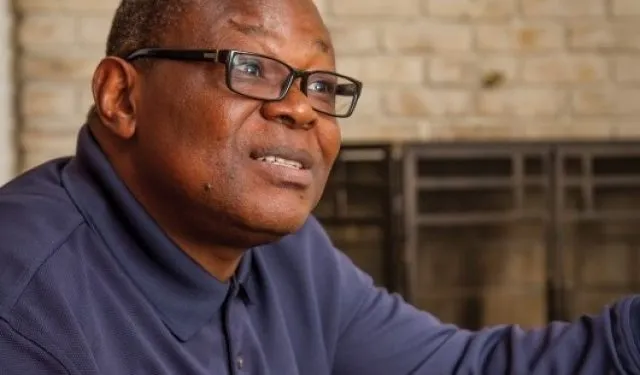

Renowned peacebuilding expert Emmanuel Habuka Bombande has cautioned that any effort to bring the Alliance of Sahel States (AES) back into the Economic Community of West African States must be grounded in trust and institutional reform rather than emotional appeals.
Speaking in a telephone interview, Bombande said recent calls by regional lawmakers for Mali, Burkina Faso, and Niger to rejoin ECOWAS, following an upsurge in terrorist attacks across the Sahel, are understandable but largely sentimental.
According to him, genuine reintegration can only happen after ECOWAS undertakes deliberate efforts to rebuild confidence and repair the deep mistrust that led to the countries’ withdrawal from the bloc.
Also read: Anti-corruption push: Ghana Parliament leads Africa-wide governance reform drive
Bombande warned that the escalating wave of extremist violence across the Sahel has far-reaching implications for the entire West African sub-region.
“What is happening across the Sahel region has an impact on the whole of West Africa,” he said.
He explained that insecurity in the AES countries poses a direct threat to neighbouring states, increasing the risk of cross-border attacks and undermining regional peace and stability.
The former Deputy Foreign Minister stressed that ECOWAS must first focus on internal reforms aimed at restoring trust among member states.
He said the regional body should establish stronger collective security mechanisms and demonstrate that it can respond more effectively to the concerns that prompted the three countries to leave.
“When we can do that, we can talk about the three countries returning to join the bloc,” Bombande stated.
He cautioned against creating the impression that the AES countries have no option but to rejoin ECOWAS.
“If we make it look like they have no alternative but to join ECOWAS, then the policy reflection would be wrong. At this point, one could argue they have nothing to lose,” he said.
Bombande traced the roots of the current instability to decades of governance failures in the Sahel.
He said the military juntas now governing the three countries are partly the result of long-standing weaknesses in nation-building and the inability to create inclusive governments since independence.
The peace expert also discussed the decades-old Tuareg rebellion in northern Mali, which seeks an independent state known as Azawad.
According to him, while the rebellion predates the rise of terrorism in the region, the collapse of Libya following the fall of Muammar Gaddafi in 2011 created conditions that allowed jihadist groups to infiltrate the movement.
“Recently, Tuareg rebels have shown a willingness to work with terrorist groups, even if ideologically they are not aligned, because their goal remains separation from the Republic of Mali. That goes back to old grievances that Bamako has refused to address,” he noted.
Bombande highlighted the role of Algeria in mediating the Algiers Peace and Reconciliation Agreement, signed in 2015 to resolve the conflict between the Malian government and Tuareg groups.
He said Algeria has remained committed to facilitating dialogue, but acknowledged that authorities in Bamako harbour suspicions over what they perceive as Algeria’s dual role.
According to him, while Algeria supports negotiations, there are concerns that areas along its border may serve as rear bases for terrorist operations in Mali.
Bombande’s comments come at a time when security concerns are intensifying across West Africa, and debate continues over the future relationship between ECOWAS and the AES.