

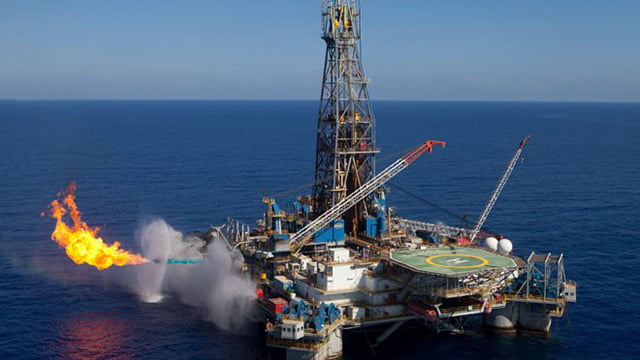

Ghana’s petroleum sector is facing a deepening crisis, as the Public Interest and Accountability Committee (PIAC) has warned of declining crude oil production, shrinking revenues, and the underutilisation of critical petroleum funds.
In its 2025 Annual Report, Public Interest and Accountability Committee (PIAC) revealed that crude oil production declined for the sixth consecutive year, falling from 71.44 million barrels in 2019 to 37.3 million barrels in 2025 — an average annual decline of approximately 9%.
The committee cautioned that without urgent policy reforms and fresh investment, the downward trend could accelerate, with serious implications for government revenue and economic stability.
Also read: Chairman Wontumi pleads not guilty to GH¢30m Exim Bank fraud charges
The report attributed the sustained decline to maturing oil fields, natural reservoir depletion, technical constraints, and a persistent lack of upstream investment.
Speaking at a training workshop for the Institute of Financial and Economic Journalists (IFEJ) and the Parliamentary Press Corps, Samuel Bekoe, Executive Director of the Center for Extractives Development in Africa, described the situation as a “systemic production decline driven by both geological and investment challenges.”
Operational inefficiencies are compounding the problem. PIAC highlighted the Tweneboa-Enyenra-Ntomme (TEN) Field, where gas reinjection surged to 81% — a sign of limited gas utilisation and suboptimal field performance.
To reverse the decline, PIAC urged the government to implement a targeted investment framework for existing fields, especially TEN, while improving fiscal and regulatory conditions to attract exploration in new basins.
The committee also recommended a medium-term strategy to improve reservoir connectivity in the TEN Field to extend its productive lifespan.
The production slump is already taking a significant financial toll. Petroleum receipts dropped by 43.27%, from US$1.36 billion in 2024 to US$770.27 million in 2025.
Revenue from crude oil liftings declined by more than half.
Of the lifting proceeds:
- Jubilee Field accounted for 66.87%
- Sankofa-Gye Nyame Field contributed 33.13%
Corporate Income Tax remained the largest revenue source at US$346.85 million, followed by:
- Carried and Participating Interest (CAPI): US$339.27 million
- Royalties: US$77.61 million
Beyond declining revenues, PIAC raised concerns over the management of petroleum funds.
A total of US$434.55 million allocated under the Annual Budget Funding Amount (ABFA) for infrastructure projects under the government’s “Big Push” agenda remains locked in a suspense account and has not been utilised.
The committee also criticised the allocation of only 0.43% of ABFA to the District Assemblies Common Fund (DACF), far below the constitutionally mandated minimum of 5%.
According to PIAC, this shortfall raises significant compliance concerns.
Total petroleum savings increased by 6.59% to US$1.55 billion.
- The Ghana Heritage Fund grew by 9.36%
- The Ghana Stabilization Fund declined by 11.14% due to withdrawals and what PIAC described as improper capping practices
Energy Sector Debt Risks Mount
Financial pressures across the energy sector are intensifying.
Receipts to the Ghana National Petroleum Corporation (GNPC) fell by 61.55% following policy changes.
Meanwhile, the Ghana National Gas Company Limited (GNGCL) is facing debt exposure of US$620.54 million, which PIAC warned poses a systemic risk to the entire energy value chain.
With production falling, revenues shrinking, and critical funds lying idle, PIAC’s latest report delivers a stark message: Ghana’s petroleum sector is at a tipping point, and the window for corrective action is rapidly closing.
The Spyer