

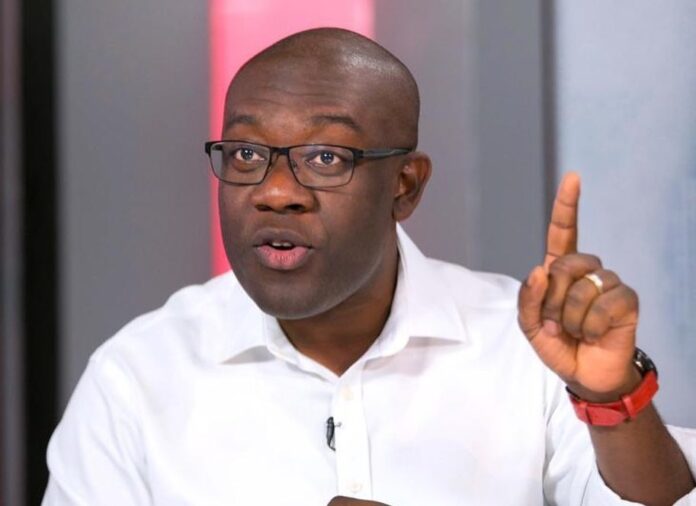

The Member of Parliament for Ofoase Ayirebi, Kojo Oppong Nkrumah, has launched a scathing attack on the government, alleging a deliberate strategy of arrests, detentions, and intimidation aimed at suppressing dissenting voices and diverting public attention from the country’s mounting economic woes.
The former Information Minister warned that recent actions by state security agencies against opposition figures, journalists, and critics are unhealthy for Ghana’s democracy.
Speaking on the sidelines of the Minority Caucus workshop on Tuesday, Oppong Nkrumah claimed the government has developed a systematic approach to target individuals who express opposing views.
Also read: Arsenal win Premier League title for the first time in 22 years
“It doesn’t matter that the person is an NPP person. If it is a non-constitutional act, if it is an affront on our democratic credentials, speak up,” he insisted.
He cited specific incidents, including individuals whom the BNI allegedly invited after attempting to film abandoned Agenda 111 hospital projects in the Volta Region, and some journalists who were reportedly compelled to delete content from their phones during public events.
“The government doesn’t want you to talk about those things. So what they try to do is, let’s arrest this one, let’s deny this one bail, let’s invite this one to BNI,” Oppong Nkrumah stated.
The MP also raised serious concerns about the condition of NPP communicator Kwame Baffoe Abronye, popularly known as Abronye DC.
He alleged that Abronye is in a difficult health state while in custody, and that lawyers and family members are being denied access to him. Oppong Nkrumah maintained that using arrests and detention as political tools is unacceptable and unsustainable in a democratic state.
The Ofoase MP argued that the suppression tactics are designed to divert attention from key national challenges.
He claimed the actual financial losses at the central bank stand at GH¢34.9 billion, arguing that taxpayers will ultimately bear the burden of recapitalising the institution.
Mr. Oppong Nkrumah also raised concerns about rising youth unemployment, especially in the Greater Accra Region, which he claimed has reached 49 percent, noting that despite government promises, including the proposed 24-hour economy policy, many young people remain unemployed.
“Disagreement in a democracy should not result in arrest, detention, or denial of bail,” he stressed, calling on Ghanaians to remain vigilant.