

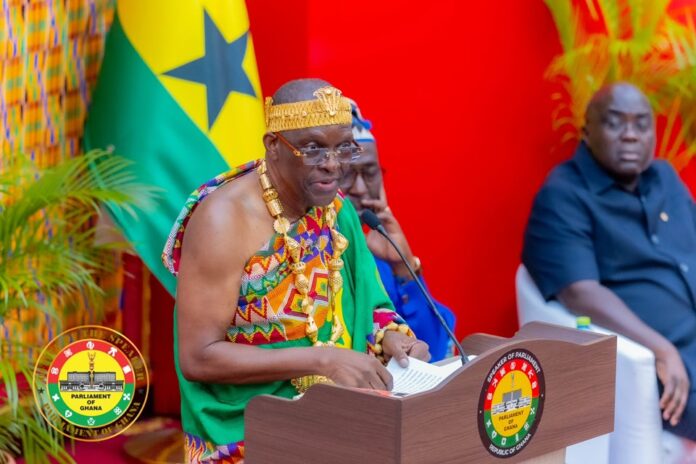

Parliamentarians, political leaders, traditional authorities, faith-based organisations, and civil society representatives from 20 African countries have adopted a landmark communiqué and advanced a draft African Charter on Family, Sovereignty and Values, declaring that Africa’s cultural identity, family systems, and sovereignty are non-negotiable.
The resolution was adopted at the conclusion of the 4th African Inter-Parliamentary Conference on Family, Sovereignty and Values, held in Accra from June 3 to 5, 2026.
In a communiqué issued at the end of the conference, delegates expressed concern over what they described as growing threats to African family structures, national sovereignty, and societal values arising from external ideological influences, policy frameworks, and cultural pressures that do not reflect African traditions and aspirations.
Also read: AI-driven filters and algorithms ‘stealing cultural identity’ from African youth – Sam George
The conference reaffirmed that the family remains ‘the natural and fundamental unit of society’ and serves as the foundation for social stability, cultural continuity, and sustainable development across the continent.
Delegates pledged to strengthen cooperation among African legislatures and mobilise governments, civil society organisations, traditional leaders, and citizens to defend Africa’s right to define its own values, laws, policies, and development priorities.
However, the adoption of the communiqué was not unanimous, as South Africa’s delegation formally reserved its position on the proposed Charter, while Mozambique failed to adopt due to a lack of timely access to the content of the document.
The South African delegation explained that while it participated in the discussions in good faith, it could not endorse the charter in its current form.
Certain provisions of the charter, it said, conflict with Chapter 2 of the South African Constitution, which contains the country’s Bill of Rights, and do not align with the regional and international legal obligations that South Africa upholds.
Mozambique cited procedural and institutional considerations rather than substantive objections to the document. In a statement presented on behalf of the Parliament of Mozambique, it said the country fully recognised the purpose and merit of the charter.
According to the statement, Mozambique had not received sufficient advance access to the final content of the document to complete the consultations required under its legal and institutional framework.
The significance and sensitivity of the issues addressed in the charter, it said, necessitated prior consultation, socialisation and joint review involving the Mozambican Parliament, the government and other competent national authorities before a formal decision could be taken. It requested its signature be deferred until the necessary domestic processes had been completed.
Delegates endorse seven strategic areas
Meanwhile, participants deliberated on seven thematic areas, including family systems, sovereignty and cultural preservation, values-based education, marriage and family well-being, technology and media influences, comparative legislative approaches, and the drafting of the African Charter.
The conference expressed concern over increasing social fragmentation, youth unemployment, digital dependency, migration, and poverty, which delegates said are weakening the transmission of African values to younger generations.
Delegates agreed that African nations must preserve their sovereign right to determine their own laws, values and development priorities without external pressure or conditionalities.
“True sovereignty may require difficult choices and sacrifices,” the communiqué stated, adding that Africa’s value systems should never be compromised in exchange for foreign assistance or political influence.
Education and youth development
Participants also called for educational reforms that place greater emphasis on character formation, civic responsibility, ethics, and cultural identity.
The conference urged African governments to integrate moral and cultural education into national curricula while expanding technical and vocational training opportunities, entrepreneurship support, and youth mentorship programmes.
Delegates warned that social media, commercial entertainment platforms, and digital technologies are increasingly shaping youth behaviour with limited parental guidance and cultural grounding.
Digital sovereignty and child protection
The conference advocated stronger cybersecurity, data protection, and digital governance frameworks across the continent.
Participants called for the domestication and implementation of the Malabo Convention and urged governments to develop indigenous African artificial intelligence systems, language models, and digital technologies.
The communiqué also emphasised the need to protect children from harmful online content, cyberbullying, digital exploitation, and technology-driven addiction.
Institutional framework approved
To ensure implementation of conference resolutions, participants endorsed a proposal for the Conference of Speakers and Presidents of African Legislatures (COSPAL) to establish a Committee on Family, Sovereignty and Values.
The committee will oversee the institutionalisation of conference outcomes and establish a secretariat to coordinate advocacy, research, monitoring, and annual conferences.
Delegates also recommended the creation of national parliamentary caucuses on family, sovereignty and values across participating countries.
Looking ahead
The conference called on African parliaments to undertake national consultations on the draft African Charter on Family, Sovereignty and Values and encouraged civil society organisations to facilitate broad public engagement ahead of the next conference.
The delegates maintained that preserving Africa’s identity, values, and sovereignty remains essential to the continent’s future development and self-determination.
Participants also urged all African legislatures to attend the 5th African Inter-Parliamentary Conference on Family, Sovereignty and Values, scheduled for May 2027 in Burkina Faso.
The communiqué expressed appreciation to President John Mahama, Speaker Alban Bagbin, and participating parliamentary leaders for their support in advancing the initiative.