

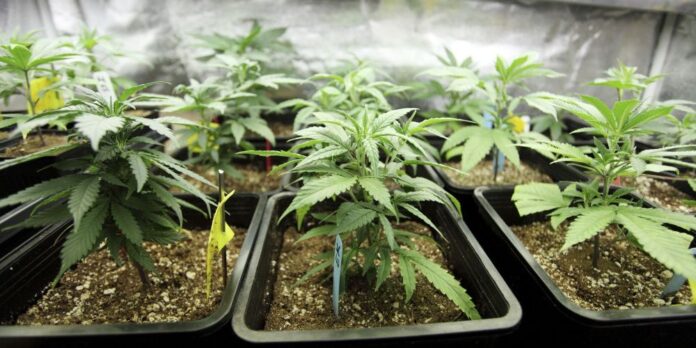

The Narcotics Control Commission (NACOC) has granted licences to two companies for cannabis cultivation for medicinal and industrial purposes, as Ghana takes steps to develop a tightly regulated cannabis industry
The two companies, MJ Adom Limited and Juliopta Limited, have been authorised to cultivate cannabis with a tetrahydrocannabinol (THC) content of not more than 0.3 per cent.
The approval forms part of efforts to create jobs, attract investment and support research into the medicinal and industrial applications of cannabis while maintaining strict regulatory controls.
Also read: Minority raises red flags over Damang mining lease and five others approved by Parliament
The companies were issued the licences after meeting the requirements established under Ghana’s regulatory framework for cannabis cultivation.
Speaking at the licence presentation ceremony, the Director-General of NACOC, Major General Maxwell Obuba Mantey, said the approval process was deliberately rigorous to ensure that only qualified applicants entered the emerging industry.
According to him, the two companies underwent detailed technical assessments, field inspections and reviews by a multi-agency technical committee before recommendations were submitted to the Minister for the Interior for final approval.
Major General Mantey stressed that cannabis cultivation remains illegal in Ghana unless it is carried out under a valid licence and within the approved THC limit of 0.3 per cent.
He explained that the regulatory framework was designed to distinguish between licensed cannabis cultivation for approved medicinal and industrial purposes and illegal recreational use.
“Only licensed cultivation of cannabis with a THC content of not more than 0.3 per cent is legal. Recreational cannabis remains illegal, and anyone who cultivates without a licence faces the full force of the law,” he said.
The NACOC Director-General said the initiative is being implemented as a pilot programme to enable Ghana to explore the economic and scientific potential of cannabis while maintaining strict measures to prevent abuse.
He said the regulated approach could create opportunities for employment, investment and research, provided operators comply fully with the applicable laws and regulations.
Major General Mantey warned the two companies that their licences could be revoked if they fail to comply with the strict conditions governing cannabis cultivation.
He urged the licence holders to view regulatory compliance as essential to the success and sustainability of their operations.
“If you comply with the regulations, the opportunities are significant. If you abuse the system, we will revoke the licence and enforce the law,” he warned.
He disclosed that NACOC officers would conduct inspections of licensed cultivation sites, either with or without prior notice, to ensure that operators comply with the conditions of their licences.
The commission will also closely monitor the THC content of cultivated cannabis.
According to Major General Mantey, any licence holder whose cannabis crops exceed the approved THC threshold must immediately notify NACOC to enable the commission to take appropriate action, including the disposal of the affected crops where necessary.
The cannabis cultivation licences issued to MJ Adom Limited and Juliopta Limited are valid for three years.
However, the licences are subject to continued compliance with Ghana’s regulatory requirements and renewal by NACOC.
The commission’s decision to license the two companies marks another step in Ghana’s efforts to establish a controlled framework for the cultivation and use of low-THC cannabis for legitimate medicinal and industrial purposes.
NACOC has reiterated that the programme will remain strictly regulated, with operators expected to comply with all licensing conditions and THC limits.
The commission is expected to maintain oversight of the sector through inspections and regulatory monitoring as Ghana seeks to balance the potential economic benefits of the emerging cannabis industry with the need to prevent misuse and illegal cultivation.