

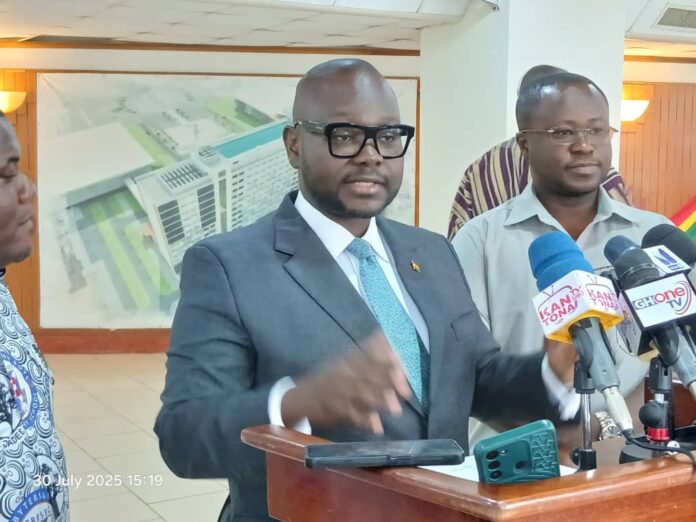

Member of Parliament for Bantama, Francis Asenso-Boakye, has issued a stern call to the government, urging a significant surge in funding for flood control projects.
The former Minister for Works and Housing warned that Ghana’s perennial flooding crisis has reached a critical stage that demands immediate, sustained infrastructure investment rather than partisan rhetoric.
In an interview with Channel One News on Thursday, June 11, the Ranking Member on the Local Government and Decentralisation Committee lamented the severity of the floods experienced throughout 2025 and the first half of 2026. He cautioned that the situation is worsening even before the rainy season peaks.
Also read: Former Chief Justice Sophia Akuffo resigns from Council of State
Asenso-Boakye expressed frustration over the politicization of the crisis, noting that flooding is a national emergency that threatens both lives and livelihoods.
Addressing the current administration’s struggle to manage the disaster, he emphasized that the issue transcends political cycles.
“Flooding is the last thing to be politicised. It is a national issue that affects lives and livelihoods. Unfortunately, those who criticised the previous government now find themselves presiding over what has arguably become one of the most severe flooding periods in recent years,” he stated.
The former Minister identified a trifecta of causes for the persistent flooding:
- Inadequate Investment: Insufficient commitment to large-scale flood mitigation.
- Regulatory Failure: Weaknesses in development control and the issuance of building permits in flood-prone areas.
- Public Behavior: The persistent challenge of indiscriminate waste disposal clogging drainage systems.
He directed a firm message to Metropolitan, Municipal, and District Assemblies (MMDAs), reminding them that they are legally mandated to enforce planning regulations.
“I do not agree with claims that political interference should prevent them from carrying out their statutory duties,” he added.
Highlighting the groundwork laid by the previous administration, he pointed to the Greater Accra Resilient and Integrated Development (GARID) Project, which saw an investment of approximately GH¢540 million to improve drainage along the Odaw River Basin.
To ensure long-term resilience, the MP proposed a comprehensive roadmap:
Increased Infrastructure Funding: Expanding and maintaining drainage networks nationwide.
Dedicated Financing: Establishing a National Flood Control Fund.
Stricter Enforcement: Empowering MMDAs to halt illegal development in waterways.
Collective Responsibility: Intensifying public education to shift community attitudes toward sanitation and waste management.
“Unless government institutions and citizens work together to tackle the root causes of flooding, the country will continue to experience avoidable disasters year after year,” Asenso-Boakye stressed.