

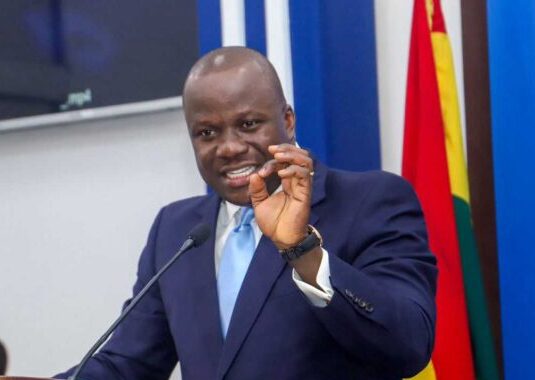

The Member of Parliament for Damongo, Samuel Abu Jinapor, has opposed the Tribunals Bill, 2026, warning that the reintroduction of regional tribunals could revive painful memories of injustice associated with Ghana’s military era.
He questioned the policy rationale behind operationalising regional tribunals when Ghana’s existing court system has served the Fourth Republic effectively for more than three decades.
According to the former Lands and Natural Resources Minister, Ghana already has an established judicial structure comprising District Courts, Circuit Courts, High Courts, the Court of Appeal and the Supreme Court, making the proposed tribunals unnecessary.
Also read: Staff involved in fraud drops 40%, but 34% of staff were dismissed – BoG
Contributing to debate on the report of Parliament’s Joint Committee on Constitutional, Legal and Judiciary on Wednesday, Mr. Jinapor argued that regional tribunals evoke memories of the Provisional National Defence Council (PNDC) era, when, according to him, tribunals were associated with miscarriages of justice.
“These were tribunals where you could not even see the faces of judges. These were tribunals which dispensed with justice in a manner that perpetuated enormous injustices to many Ghanaians,” he told the House.
He maintained that Ghana’s democratic dispensation has thrived under the current judicial system and questioned why the government was seeking to establish an additional layer of courts.
New Judicial structure
The Damongo MP challenged the government to explain why it intends to operationalise regional tribunals when existing courts could be strengthened to address delays in the justice delivery system.
He argued that instead of creating new tribunals, government should recruit more judges, judicial staff and court clerks while expanding court infrastructure to clear the backlog of cases.
Mr. Jinapor also referred to the committee’s report, which indicated that the proposed tribunals could help address more than 3,300 backlog criminal cases, insisting that the same objective could be achieved by adequately resourcing the High Courts.
“Why can we not strengthen the existing High Courts, recruit more judges, provide more logistics and improve the fast-track system instead of creating regional tribunals?” he asked.
Political abuse
The former minister cautioned against what he described as the potential politicisation of the proposed tribunals.
He warned that the new judicial bodies could create opportunities for political interference if not properly managed.
“I don’t want to believe this is a job for the boys,” he stated, adding that Ghana should avoid any judicial arrangement capable of intimidating political opponents.
According to him, the country should preserve and strengthen the judicial institutions that have underpinned constitutional democracy since the beginning of the Fourth Republic.
Defence of Bill
Supporting the bill, however, the Attorney General, Dominic Ayine, argued that regional tribunals are already provided for under the 1992 Constitution and complement the existing judicial system rather than replace it.
He explained that the tribunals would focus exclusively on criminal matters and help speed up the adjudication of cases, thereby reducing delays in Ghana’s justice system.