

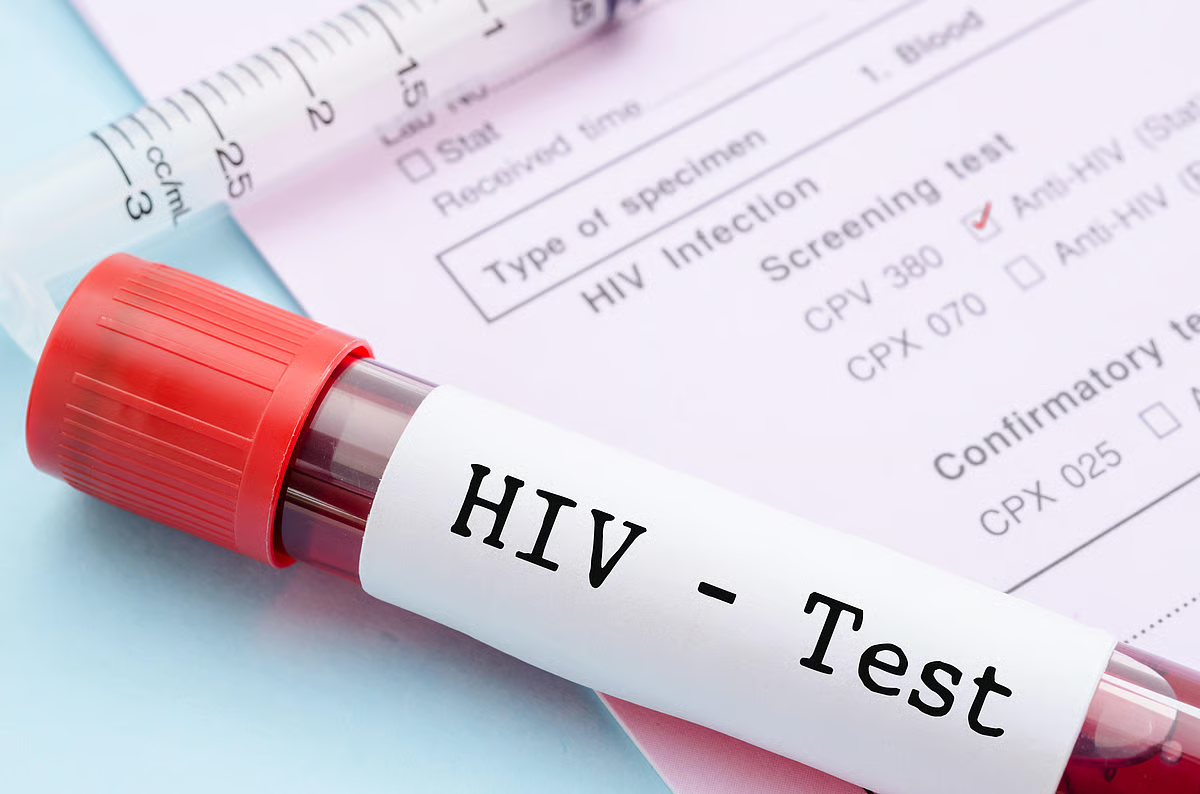

The recent revelation that 1,300 applicants who participated in the security services recruitment exercise tested positive for HIV should not be treated as just another statistic. It is a serious national warning that demands honest reflection, urgent action, and a renewed commitment to protecting Ghana’s most valuable asset — its young people.
The disclosure, made by the Minister for the Interior, has sparked public discussion, but the conversation must go beyond the recruitment exercise. The issue is not about individuals who tested positive for HIV; rather, it is about the broader challenge of HIV prevention, education, stigma reduction, and access to healthcare among Ghana’s youth.
According to the Ghana AIDS Commission’s 2024 National HIV Estimates, 334,721 people are living with HIV in Ghana, including 37,283 young people between the ages of 15 and 24. The country recorded 15,290 new HIV infections in 2024, with 4,732 occurring among young people within that age bracket.
Also read: Ato Forson to launch new economic policy in 2026 Mid-Year Budget
These figures are alarming because the youth represent the future workforce, leadership and productive capacity of the nation. Every young person lost to preventable infections represents a loss to families, communities and Ghana’s development aspirations.
The growing challenge of HIV among Ghana youth should therefore be viewed not only through the lens of public health but also as a national development concern.
A country cannot achieve sustainable economic growth if a significant portion of its young population faces health challenges that reduce productivity, increase healthcare costs, and disrupt education and employment opportunities.
One of the most worrying aspects of the HIV situation is the limited knowledge about prevention among young people. The Ghana Demographic and Health Survey indicates that only a minority of young men and women aged 15 to 24 have comprehensive knowledge about HIV prevention.
This gap in awareness should concern every Ghanaian. In an era where information is readily available, many young people are still growing into adulthood without adequate knowledge about how HIV is transmitted, how it can be prevented, and the importance of early testing and treatment.
The decline in sustained public education campaigns over the years has contributed to this challenge. HIV awareness cannot be treated as a campaign that appears only during commemorative events such as World AIDS Day. It must be a continuous national programme integrated into schools, communities, workplaces and digital spaces where young people spend much of their time.
However, education alone is not enough. The social and economic conditions that increase vulnerability must also be addressed.
Poverty, unemployment, substance abuse, stigma and limited access to youth-friendly healthcare services all contribute to the spread of HIV. A young person struggling with economic hardship may find it more difficult to access healthcare, seek information, or make informed decisions about their health.
The disproportionate impact of HIV on women and girls also requires urgent attention. Women account for a significant majority of people living with HIV in Ghana, and this reflects deeper issues involving gender inequality, economic vulnerability and access to reproductive health information and services.
As a nation, Ghana must strengthen its response. The call by lawmakers for the operationalisation of the National HIV and AIDS Fund established under Act 938 (2016) deserves serious consideration. Sustainable financing is critical if Ghana is to maintain prevention programmes, expand treatment access and achieve the goal of ending HIV as a public health threat by 2030.
Government agencies, civil society organisations, religious bodies, traditional leaders and youth groups must work together to confront the challenge. Fighting HIV requires a national partnership, not isolated interventions.
Most importantly, Ghana must move away from stigma and discrimination against people living with HIV. Fear and shame discourage people from testing, seeking treatment, and openly discussing prevention. HIV is a health condition that requires compassion, support and evidence-based responses.
The recent statistics should not create panic; they should create urgency. Ghana has made progress in managing HIV, but complacency could reverse those gains.
The youth are Ghana’s greatest resource. They are the future doctors, teachers, engineers, entrepreneurs, farmers, security officers and leaders. Protecting them from HIV is not just a health responsibility — it is an investment in the future of the country.
The time has come for Ghana to renew its commitment to HIV prevention, strengthen public education and ensure that every young person has access to accurate information, testing and treatment.
The fight against HIV among Ghana youth is a fight for Ghana’s future. It is a fight we cannot afford to lose.