

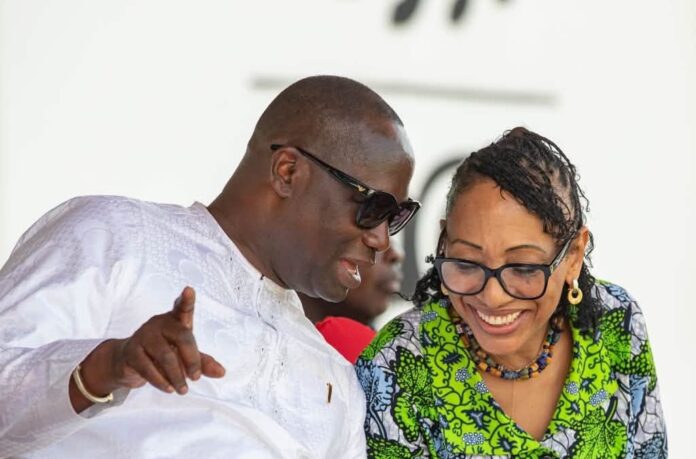

The Member of Parliament for Ellembelle, Emmanuel Armah-Kofi Buah, has called on Ghanaians to go beyond commemorating the legacy of Osagyefo Dr Kwame Nkrumah and take bold steps to revive Kwame Nkrumah’s vision of self-reliance, industrialisation and Pan-Africanism.
Mr Buah said the ideals championed by Ghana’s first President must inspire practical action to build a prosperous, economically independent and self-sustaining nation.
The Ellembelle MP made the call on Friday, July 31, 2026, when he spoke at the launch of Nkrumafest 2026 at the Kwame Nkrumah Mausoleum in Accra.
Also read: Front Pages: Top newspaper headlines for Saturday, August 1st, 2026
The annual commemoration of Dr Nkrumah, he said, should provide an opportunity for Ghanaians to reflect on the progress made by the country and renew their commitment to the principles that shaped the founding vision of the nation.
“As we celebrate Dr Kwame Nkrumah’s vision of self-reliance and enduring legacy, we must ask ourselves: Have we heeded his warnings? Have we embraced his vision?” Mr Buah asked.
Nkrumah’s vision
According to the MP, the country must critically examine whether it has successfully transitioned from “the rhetoric of Pan-Africanism to the reality of Pan-Africanism.”
He argued that the most meaningful way to honour Ghana’s first President is not through ceremonial activities alone but by pursuing the ideals of self-reliance, economic independence and industrial development.
“To celebrate his enduring legacy is not where roses are placed at his feet. It is for us to build upon the foundations he laid,” he stated.
Mr Buah said Kwame Nkrumah’s vision of self-reliance remains relevant to Ghana’s development aspirations and should encourage citizens and policymakers to focus on building strong local institutions and industries.
The former Minister for Energy challenged Ghanaians to take a fresh look at the country’s education and economic systems to determine whether they are delivering the kind of development envisioned by Dr Nkrumah.
“We must look at the schools he built and ask: Are we educating our children for liberation or for subjugation? We must look at the factories he established and ask: Are we building an economy that serves our people?” he said.
Mr Buah also raised concerns about Ghana’s continued dependence on the export of raw materials, stressing the need to expand local processing and value addition.
“Are we still just sending raw materials, or are we adding value to the things we have a comparative advantage in here at home?” he asked.
He said investing in local industries and adding value to Ghana’s natural resources would help create jobs, strengthen the economy and promote greater national self-reliance.
Mr Buah maintained that the legacy of Osagyefo Dr Kwame Nkrumah goes beyond monuments, statues and historical commemorations.
He said Nkrumah’s impact can be seen in the infrastructure established during his leadership, as well as in the aspirations of Ghanaians who continue to work towards a better future.
“His legacy is alive in the roads we travel, the hospitals that heal us and the industries that sustain us. More importantly, his legacy lives in the spirit of every Ghanaian who dares to dream beyond present circumstances,” he said.
“Let us not go to Nkroful as tourists visiting a shrine, but as patriots returning to the source of our strength. Let us march with pride. Let us teach our children his name with reverence and reflect deeply on whether we are upholding the vision of self-reliance,” he stated.
Nkrumah’s legacy
The launch of Nkrumafest 2026 brought together government officials, Members of Parliament, traditional leaders, diplomats, academics, youth groups and admirers of Ghana’s first President.
The event commemorated Dr Kwame Nkrumah’s enduring contribution to Ghana’s independence, nation-building and the Pan-African movement.
The annual festival also provides a platform for discussions on Kwame Nkrumah’s vision of self-reliance, leadership, African unity, economic transformation and national development.