

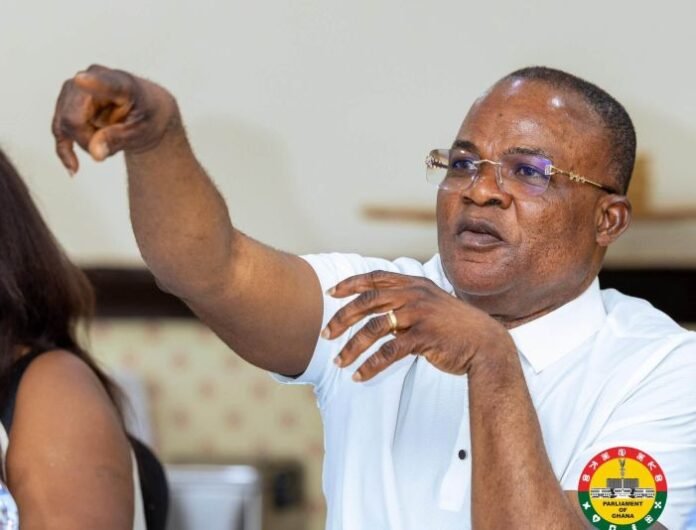

Clerk to Parliament, Ebenezer Ahomah Djietror, has urged Parliament to subject the 2027 Budget to rigorous scrutiny to ensure that economic stability translates into increased production, job creation, improved living conditions and sustainable development.
He cautioned that economic stability must not become an end in itself but should deliver tangible benefits to Ghanaians.
Mr Djietror made the remarks on Monday, November 16, 2026, at the opening ceremony of Parliament’s post-2027 Budget workshop at Parliament House in Accra.
Also read: Madina 2028: Rashid Seidu calls for Siidi Abubakar Musah to go unopposed as NDC candidate
The two-day workshop, organised by the Parliamentary Service through the Parliamentary Training Institute, is designed to equip MPs with the technical knowledge required to effectively scrutinise the government’s fiscal policies, expenditure priorities and development programmes.
Addressing participants, the Clerk emphasised that Parliament’s consideration and approval of the national budget constitutes one of its most fundamental constitutional responsibilities.
According to him, lawmakers must ensure that proposed policies, programmes and resource allocations align with national development priorities while promoting fiscal discipline, transparency, accountability and value for money.
“It is therefore imperative that Parliament subjects the budget to rigorous and informed scrutiny,” he stated.
Mr Djietror reminded MPs of their constitutional responsibilities under Articles 174 and 179 of the 1992 Constitution, particularly regarding taxation and public expenditure.
Parliament, he said, must scrutinise the Appropriation Bill, tax legislation and other financial instruments while examining the budget estimates of Ministries, Departments and Agencies against their targets and expected outputs.
He stressed the importance of monitoring government revenue, expenditure and project delivery, urging Parliament to strengthen institutional accountability through the work of the Public Accounts Committee, Assurances Committee and the Auditor-General.
The workshop will examine several critical areas of the 2027 Budget, including macroeconomic stability, fiscal discipline, public debt sustainability, infrastructure development and capital investment.
Particular attention will be given to the government’s proposed $10 billion New Economy programme and its role in driving structural economic transformation.
Revenue mobilisation, public expenditure efficiency, decentralisation, peace and security will also feature in the discussions.
Mr Djietror disclosed that efforts are underway to operationalise Parliament’s Office of the Budget and Fiscal Analysis.
The proposed office is expected to provide independent, specialised and evidence-based technical support to strengthen Parliament’s economic and financial oversight responsibilities.
He urged MPs to actively participate in the workshop and use the expertise of resource persons to enhance their understanding of the budget ahead of detailed parliamentary scrutiny.