

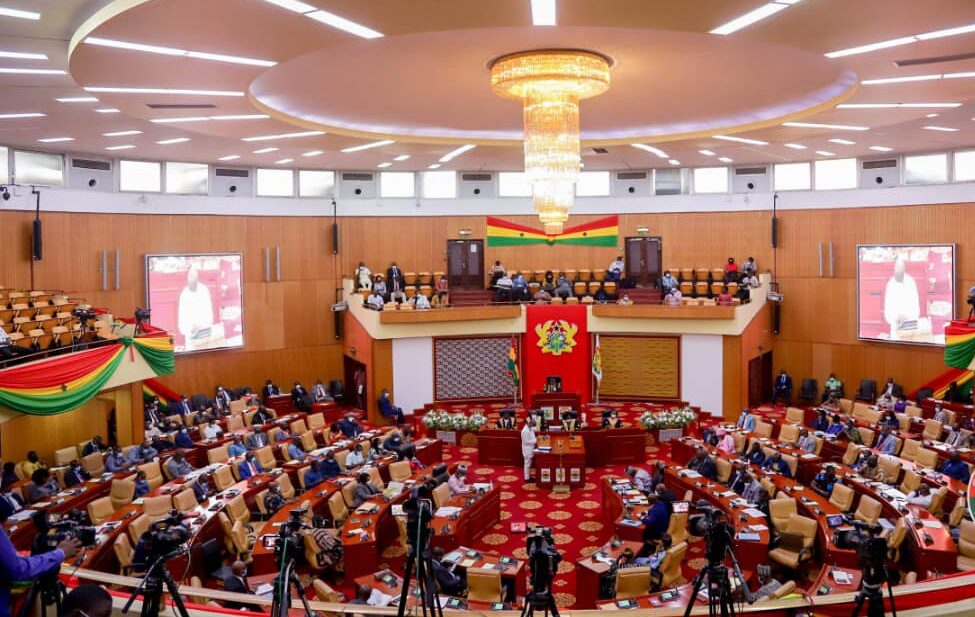

Parliament has passed the Energy Sector Levies (Amendment) Bill, 2026, in a move aimed at closing a major tax loophole allegedly being exploited to smuggle diesel under the classification of fuel oil.
The legislation, passed on Friday, July 31, 2026, seeks to protect government revenue and strengthen controls within Ghana’s downstream petroleum sector.
Finance Minister Dr Cassiel Ato Forson said the fuel tax amendment was necessary after the government detected a sharp and unexplained increase in fuel oil consumption, raising concerns that some individuals are taking advantage of the significant tax difference between diesel and fuel oil.
Also read: African Women’s Day 2026: Shirley Kyei calls for action to secure Africa’s water future
According to Dr Forson, the suspected scheme could cost the state about $25 million in lost revenue between January and June 2026 if left unchecked.
Fuel tax
Under the existing tax structure, diesel attracts taxes of about GH¢3.35 per litre, while fuel oil attracts a significantly lower levy of approximately GH¢0.24 to GH¢0.25 per litre.
The Finance Minister explained that the large difference created a strong financial incentive for some traders to purchase diesel, misclassify it as fuel oil and take advantage of the lower tax rate.
Dr Forson said data from the past five years showed that Ghana’s average monthly fuel oil consumption should be around 5 million litres.
However, between January and June 2026, the reported volume increased to more than 20 million litres per month, representing a 493 per cent increase compared with the previous trend.
He said the unusual surge was a clear indication that the tax disparity was being exploited.
“This represents a 493 per cent increase over the last year,” Dr Forson told Parliament.
Dr Forson stressed that the government’s objective is not to withdraw tax relief from industries that legitimately use fuel oil.
Instead, the government intends to change the system from an ex-ante tax exemption to an ex-post refund mechanism.
Under the proposed arrangement, eligible industries would initially pay the applicable tax and subsequently apply for a refund.
The Finance Minister said the measure would ensure that legitimate industrial users continued to benefit from the intended tax relief while preventing smugglers from exploiting the subsidy regime.
“This will not amount to a tax increase,” he assured Parliament.
The Finance Minister also clarified that the Energy Sector Levies in Ghana would not result in an increase in the prices of petroleum products at fuel stations.
He explained that fuel oil is primarily used by industries and is not a product commonly purchased by motorists.
The government, he said, would continue to support industries through the tax refund arrangement while tightening controls to prevent abuse.
Dr Forson said the government had previously encountered a similar situation involving marine gas oil.
According to him, the government responded by aligning the tax treatment of marine gas oil with diesel, which helped to eliminate the incentive for smugglers.
He said the same pattern appeared to have shifted to fuel oil after the previous loophole was closed.
“Since January this year, the Finance Ministry has seen that the scheme has been moved from marine gas oil to fuel oil,” he said.
The latest fuel tax amendment in Ghana is therefore intended to address the new loophole and safeguard government revenue.
Tax refunds
To ensure that genuine industrial users are not negatively affected by the new arrangement, the government plans to reduce the waiting period for tax refunds.
Dr Forson said the government would amend the Revenue Administration Act to reduce the refund period for eligible industries buying fuel oil from 90 days to 14 days.
In the interim, he said, the Commissioner-General of the Ghana Revenue Authority (GRA) would issue a practice note allowing eligible businesses to access the tax exemption through a refund mechanism within 14 clear days.
The government believes the faster refund process will help industries maintain access to the tax relief while reducing the incentive for fuel smuggling.
The Finance Minister warned that failure to address the loophole could expose the state to substantial revenue losses.
He cautioned that Ghana could lose more than GH¢1 billion every year if the suspected smuggling and tax evasion scheme was allowed to continue.
The passage of the Energy Sector Levies (Amendment) Bill, 2026, is therefore expected to strengthen revenue mobilisation, protect legitimate industrial support measures and curb abuse within the downstream petroleum sector.
The legislation is also expected to reduce the price differential that has allegedly encouraged the misclassification of diesel as fuel oil, while ensuring that genuine industrial users continue to receive the intended tax relief.